
Al Mumeet – The Giver of Death | Meaning, Quran, Hadith & Benefits
Table of contents
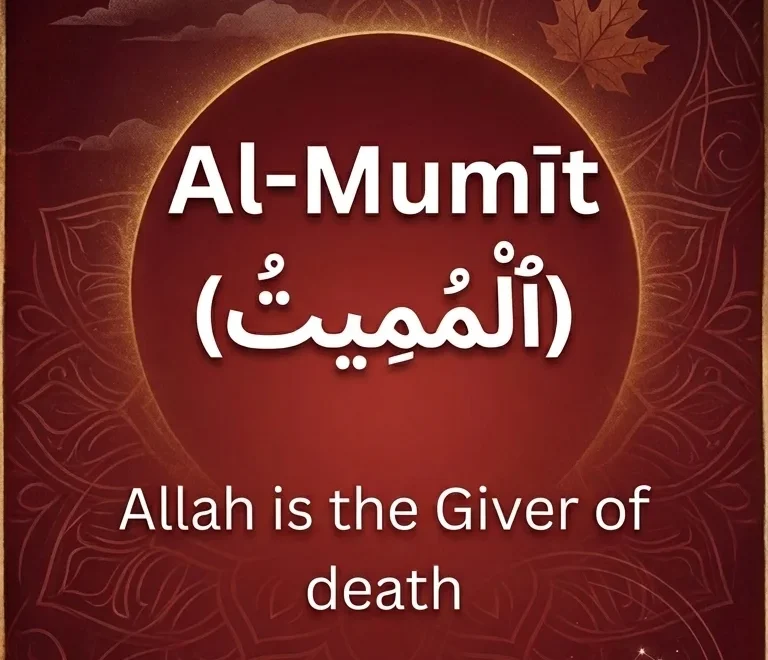
Al-Mumeet (ٱلْمُمِيتُ) means “The Giver of Death” or “The One Who Causes Death.” Allah alone has complete authority over life and death, and every living being will ultimately return to Him.
Al Mumeet – The Giver of Death | Meaning, Quran, Hadith & Benefits
Quick Answer: Al-Mumeet means “The Giver of Death.” Allah gives life and causes death according to His perfect wisdom and decree. Remembering this Name teaches believers humility, accountability, and preparation for the Hereafter.
Introduction
The Beautiful Name Al-Mumeet reminds believers that life and death are ultimately under Allah’s authority. Every living being has a limited time in this world.
Reflecting upon this Name encourages Muslims to value their time, remember the Hereafter, and use their lives for beneficial and righteous deeds.
Understanding Al-Mumeet also teaches humility. No person can escape death when their appointed time arrives, and every soul will return to Allah for judgment.
Quick Facts About Al-Mumeet
| Name | Al-Mumeet (ٱلْمُمِيتُ) |
|---|---|
| English Meaning | The Giver of Death; The One Who Causes Death |
| Arabic Root | م-و-ت (M-W-T) |
| Root Meaning | Death, to die, or to cause death. |
| Qur’anic Reference | The Qur’an repeatedly teaches that Allah gives life and causes death, including Surah Al-Mu’minun (23:80) and Surah Al-Hadid (57:2). |
| Related Name | Al-Muhyi – The Giver of Life. |
| Main Attribute | Allah has complete authority over life and death, and nothing can escape His decree. |
| Main Lesson | Remember death, value life, prepare for the Hereafter, and live with humility and accountability. |
Arabic Script, Transliteration & Pronunciation
| Arabic | ٱلْمُمِيتُ |
|---|---|
| English Transliteration | Al-Mumeet |
| Pronunciation | Al-Mu-meet |
| Literal Meaning | The Giver of Death; The One Who Causes Death |
| Arabic Root | م-و-ت (M-W-T) |
Detailed Meaning in English.
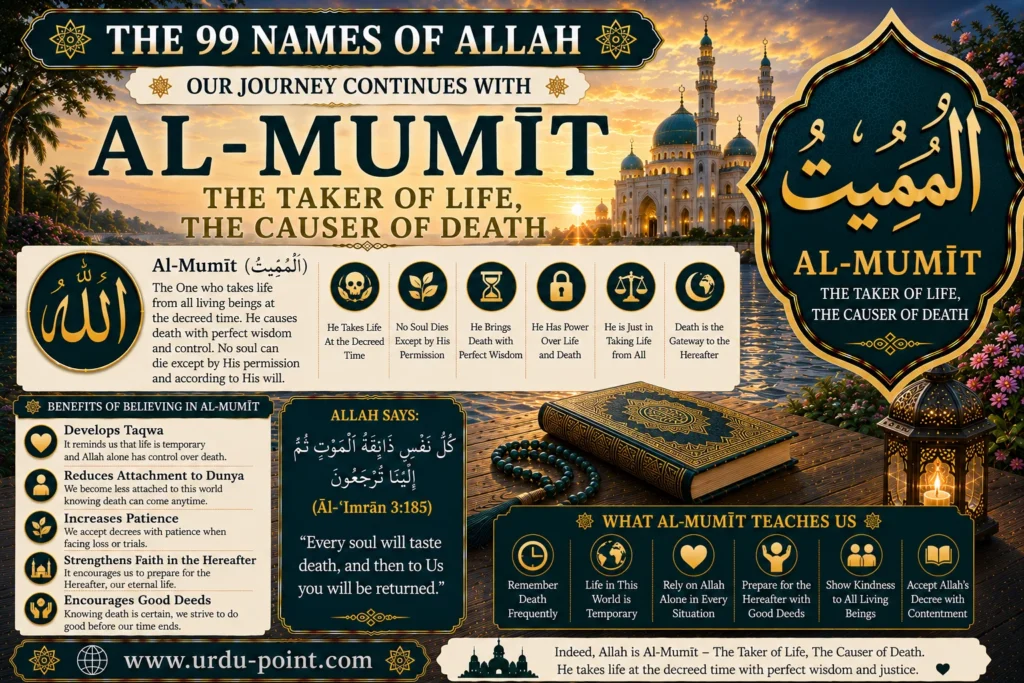
The Beautiful Name Al-Mumeet comes from the Arabic root م-و-ت, which is connected with death and the act of causing death. As a Divine Name, it conveys that Allah has complete authority over the end of every created life.
Death is not outside Allah’s knowledge or control. Every living being has an appointed term, and when that term arrives, no one can delay it. Allah’s decree concerning life and death is based upon His perfect knowledge and wisdom.
Reflecting upon Al-Mumeet should not lead a believer to hopelessness. Instead, it should encourage a meaningful life. Since our time in this world is limited, we should use it for worship, good deeds, beneficial knowledge, kindness, and preparation for the Hereafter.
This Name is also closely connected with Al-Muhyi, the Giver of Life. Allah gives life and causes death, and He will resurrect creation for the Day of Judgment. Remembering these realities helps believers maintain humility and accountability.
Al-Mumeet Meaning in English, Urdu & Hindi.
| English | Urdu | Hindi |
|---|---|---|
| The Giver of Death; The One Who Causes Death. | موت دینے والا، موت لانے والا | मौत देने वाला, मृत्यु लाने वाला |
| Allah has complete authority over life and death. | اللہ تعالیٰ کو زندگی اور موت پر مکمل اختیار حاصل ہے۔ | अल्लाह को जीवन और मृत्यु पर पूर्ण अधिकार प्राप्त है। |
| Every living being has an appointed time that cannot be changed by human power. | ہر جاندار کے لیے ایک مقرر وقت ہے جسے انسانی طاقت تبدیل نہیں کر سکتی۔ | हर जीवित प्राणी के लिए एक निश्चित समय है जिसे इंसानी शक्ति बदल नहीं सकती। |
| Al-Mumeet reminds believers that worldly life is temporary and that they should prepare for the Hereafter. | الممیت مومن کو یاد دلاتا ہے کہ دنیاوی زندگی عارضی ہے اور آخرت کی تیاری کرنی چاہیے۔ | अल-मुमीत मोमिन को याद दिलाता है कि सांसारिक जीवन अस्थायी है और आख़िरत की तैयारी करनी चाहिए। |
| Remembering death can encourage humility, repentance, gratitude, and righteous action. | موت کو یاد کرنا عاجزی، توبہ، شکر اور نیک اعمال کی ترغیب دیتا ہے۔ | मौत को याद करना विनम्रता, तौबा, शुक्र और नेक अमल की प्रेरणा देता है। |
Al-Mumeet vs Al-Muhyi
The Al-Mumeet and Al-Muhyi describe two related aspects of Allah’s complete authority over life and death. Al-Muhyi refers to Allah as the Giver of Life, while Al-Mumeet refers to Allah as the One Who causes death.
| Al-Mumeet | Al-Muhyi |
|---|---|
| The Giver of Death; The One Who Causes Death. | The Giver of Life. |
| Emphasizes Allah’s authority over the end of created life. | Emphasizes Allah’s authority to give and restore life. |
| Reminds believers that worldly life has an appointed end. | Reminds believers that life is a blessing from Allah. |
| Encourages preparation for the Hereafter. | Encourages gratitude for the blessing of life. |
| Teaches humility and accountability. | Teaches gratitude, hope, and recognition of Allah’s power. |
Reflecting upon Al-Mumeet and Al-Muhyi together reminds believers that Allah alone controls the beginning and end of every created life. This understanding encourages gratitude for life, patience during loss, and preparation for the meeting with Allah.
Qur’anic References Related to Al-Mumeet
The Qur’an repeatedly teaches that Allah has complete authority over life and death. These verses remind believers that every soul has an appointed term and that all creation will ultimately return to Allah.
Key Qur’anic Verses Related to Al-Mumeet
| Verse | English Translation | Reference | Lesson |
|---|---|---|---|
| وَهُوَ ٱلَّذِى يُحْىِۦ وَيُمِيتُ | And it is He who gives life and causes death. | Surah Al-Mu’minun (23:80) | Allah alone has complete authority over life and death. |
| لَهُۥ مُلْكُ ٱلسَّمَٰوَٰتِ وَٱلْأَرْضِ ۖ يُحْىِۦ وَيُمِيتُ | To Him belongs the dominion of the heavens and earth. He gives life and causes death. | Surah Al-Hadid (57:2) | Life and death are part of Allah’s complete dominion over creation. |
| وَأَنَّهُۥ هُوَ أَمَاتَ وَأَحْيَا | And that it is He who causes death and gives life. | Surah An-Najm (53:44) | Allah is the One who controls both death and life. |
| كُلُّ نَفْسٍ ذَآئِقَةُ ٱلْمَوْتِ | Every soul will taste death. | Surah Aal ‘Imran (3:185) | Death is a reality for every soul, so believers should prepare for the Hereafter. |
These verses establish an important reality connected with Al-Mumeet: death is not random or outside Allah’s control. Every soul has an appointed term, and Allah alone possesses complete authority over life and death.
Authentic Hadith Related to Death and the Hereafter
The Prophet ﷺ frequently reminded his companions about death and the temporary nature of worldly life. These authentic teachings encourage believers to remember the Hereafter and prepare for their meeting with Allah.
| Authentic Hadith | Source | Lesson |
|---|---|---|
| The Prophet ﷺ said: “Remember often the destroyer of pleasures: death.” | Jami’ at-Tirmidhi 2307 | Remembering death helps a believer reduce attachment to temporary worldly pleasures and prepare for the Hereafter. |
| The Prophet ﷺ said: “Be in this world as though you were a stranger or a traveler.” | Sahih al-Bukhari 6416 | A believer should remember that worldly life is temporary and should focus on what benefits them in the Hereafter. |
| The Prophet ﷺ said: “When a person dies, his deeds come to an end except for three…” | Sahih Muslim 1631 | A believer should use life wisely by leaving behind beneficial deeds that can continue after death. |
These teachings do not call believers to abandon worldly responsibilities. Rather, they teach Muslims to use their limited time wisely, fulfil their responsibilities, worship Allah, and prepare for the eternal life of the Hereafter.
How to Call Upon Allah Using the Name Al-Mumeet
Muslims may call upon Allah using His Beautiful Names when making du’a. Reflecting upon Al-Mumeet can encourage a believer to ask Allah for a good ending, forgiveness, steadfastness, and protection from dying upon disobedience.
The following are general examples of supplication based on the meaning of the Name. They are not fixed Sunnah formulas and should not be treated as prescribed du’as with a specific number of repetitions unless authentic evidence establishes that.
| Situation | Example Du’a |
|---|---|
| Seeking a Good Ending | Yā Mumeet, grant me a good ending and allow me to meet You while You are pleased with me. |
| Seeking Forgiveness | Yā Mumeet, forgive my sins, accept my repentance, and prepare me for the day when I return to You. |
| Remembering Death | Yā Mumeet, help me use my life wisely and prepare sincerely for the Hereafter. |
| Seeking Steadfastness | Yā Mumeet, keep my heart firm upon faith and obedience until my appointed time arrives. |
| Seeking Protection | Yā Mumeet, protect me from a bad ending and grant me a life filled with faith and righteous deeds. |
Reflecting on Al-Mumeet in Daily Life
Remembering Al-Mumeet can change the way a believer views time. Every day that passes brings a person closer to the end of their worldly life, so time should not be wasted on things that bring no lasting benefit.
This awareness can encourage believers to repent quickly, repair relationships, perform good deeds, and appreciate the blessings they have while they are still able to use them.
Remembering death should also increase gratitude. The opportunity to worship Allah, help others, seek knowledge, care for family, and perform righteous deeds is a blessing that should be valued.
Al-Mumeet and Preparing for the Hereafter
Understanding Al-Mumeet encourages believers to prepare for the inevitable return to Allah. Preparation does not require withdrawing from ordinary life. Instead, it means living responsibly while keeping the Hereafter in mind.
| Area of Life | Practical Preparation |
|---|---|
| Prayer | Protect the obligatory prayers and continually work on improving sincerity and devotion. |
| Repentance | Turn back to Allah after sins instead of delaying repentance. |
| Relationships | Forgive others, fulfil people’s rights, and avoid unnecessary conflicts. |
| Charity | Use wealth to help others and seek deeds whose benefit continues beyond your lifetime. |
| Good Deeds | Use your time for actions that benefit you and others in this life and the Hereafter. |
| Final Return | Remember that every soul will return to Allah and prepare accordingly. |
Reflecting upon Al-Mumeet should therefore inspire action rather than fear alone. The wise believer remembers death, appreciates life, repents from mistakes, performs good deeds, and hopes to meet Allah in a state of faith and obedience.
Benefits of Knowing Allah’s Name Al-Mumeet
Reflecting upon Al-Mumeet reminds believers that every life has an appointed end and that all people will ultimately return to Allah. This awareness can encourage sincere worship, gratitude, repentance, and preparation for the Hereafter.
| Benefit | Explanation |
|---|---|
| Strengthens Faith | Remembering Allah’s authority over life and death increases awareness of His power and wisdom. |
| Encourages Repentance | Knowing that life is temporary encourages believers to turn to Allah and seek forgiveness without unnecessary delay. |
| Increases Gratitude | Every day of life becomes an opportunity to worship Allah, help others, and perform beneficial deeds. |
| Reduces Worldly Attachment | Remembering death helps believers understand that wealth, status, and worldly pleasures are temporary. |
| Encourages Good Deeds | A believer becomes more conscious of using limited time for actions that benefit them in this life and the Hereafter. |
| Develops Humility | Remembering that every person will eventually die reminds us that human life and power are limited. |
Life Lessons from the Name Al-Mumeet
The Beautiful Name Al-Mumeet teaches Muslims that worldly life is temporary and that every person should prepare for the return to Allah. Remembering this reality can help a believer give greater importance to faith, good character, and righteous actions.
It also teaches believers not to become excessively attached to temporary worldly success. Wealth, position, health, and possessions may change, but the deeds a person sends ahead for the Hereafter are of lasting importance.
| Life Lesson | Practical Application |
|---|---|
| Value Your Time | Use your days wisely because worldly life has a limited duration. |
| Repent Quickly | Do not knowingly delay repentance when you make a mistake or commit a sin. |
| Prepare for the Hereafter | Give importance to prayer, charity, good character, and other righteous deeds. |
| Be Grateful for Life | Recognize every day as an opportunity to worship Allah and benefit others. |
| Avoid Arrogance | Remember that worldly power and status are temporary and that every person will eventually return to Allah. |
| Keep Hope in Allah | Remembering death should encourage repentance and preparation, not hopelessness. |
When a believer reflects upon Al-Mumeet, the remembrance of death can become a source of positive change. It encourages the heart to become more sincere, the tongue to speak more carefully, and the person to use their remaining time for beneficial deeds.
Can You Name a Child “Mumeet”?
Al-Mumeet is a Divine Name describing Allah as the One Who causes death. The word is connected to the Arabic root م-و-ت, which relates to death and dying.
Because Al-Mumeet describes a Divine attribute, parents should be careful when considering it as a personal name. A Muslim child’s name should have a sound and appropriate meaning, and Divine Names should be distinguished from ordinary personal names.
| Name | Meaning | Guidance |
|---|---|---|
| Mumeet | One who causes death. | Derived from the Arabic root related to death; its use as a personal name should be considered carefully. |
| Al-Mumeet | The Giver of Death; The One Who Causes Death. | A Divine Name describing Allah’s authority over life and death. |
| Abdul Mumeet | Servant of Al-Mumeet. | A servant-name expressing servitude to Allah. |
Scholar’s Summary: Al-Mumeet describes Allah’s complete authority over death. The form Abdul Mumeet expresses servitude to Allah. Anyone choosing a Muslim name should verify its exact Arabic spelling, meaning, and Islamic suitability with a qualified scholar.
Frequently Asked Questions About Al-Mumeet
Al-Mumeet means “The Giver of Death” or “The One Who Causes Death.” It refers to Allah’s complete authority over the end of created life.
The Name emphasizes that Allah controls life and death according to His perfect knowledge, wisdom, and decree.
The Qur’an repeatedly teaches that Allah gives life and causes death, including Surah Al-Mu’minun 23:80, Surah Al-Hadid 57:2, and Surah An-Najm 53:44.
The Name teaches believers to remember death, value their time, repent from sins, perform righteous deeds, and prepare for the Hereafter.
Al-Mumeet refers to Allah as the One Who causes death, while Al-Muhyi refers to Allah as the Giver of Life. Together they highlight Allah’s complete authority over life and death.
Conclusion
The Beautiful Name Al-Mumeet reminds believers that Allah has complete authority over life and death. Every soul has an appointed time, and every person will ultimately return to Allah.
Remembering this Name should encourage us to value our limited time, repent from our mistakes, appreciate the blessing of life, and prepare for the Hereafter through sincere faith and righteous deeds.
May Allah grant us a life of faith and obedience, forgive our shortcomings, give us a good ending, and allow us to meet Him while He is pleased with us. Ameen.
Stay Connected With Us
You can join our WhatsApp and Telegram Channels to receive new Islamic articles, Duas, Quran content, and updates.
Related Posts:
- Al Muhyi – The Giver of Life | Meaning, Quran, Hadith & Benefits
- Al Ba’ith – The Resurrector | Meaning, Quran, Hadith & Benefits
- Al Mueed – The Restorer | Meaning, Quran, Hadith & Benefits
- Al Muizz – The Giver of Honor | Meaning, Quran, Hadith & Benefits
- Ash Shakoor – The Most Appreciative | Meaning, Quran, Hadith & Benefits