Surah Yaseen read in Arabic with English translation, transliteration, tafseer Ibn Kathir, benefits, lessons, and FAQs.

Surah Yaseen read in Arabic with English translation, transliteration, tafseer Ibn Kathir, benefits, lessons, and FAQs.
Surah Yaseen
| Surah Number | 36 |
| Surah Name | Yaseen (يس) |
| Meaning | Ya Seen (Disjointed Letters) |
| Revelation Place | Makkah |
| Total Ayat | 83 |
| Main Theme | Tawheed, Prophethood, Resurrection, Accountability |
| Also Known As | Heart of the Qur’an |
Surah Yaseen is among the most beloved chapters of the Qur’an. It emphasizes Allah’s Oneness, the truth of Prophet Muhammad ﷺ, and the certainty of life after death. The Surah uses powerful signs, examples, and warnings to awaken hearts and guide humanity.
Ayah by Ayah (Arabic, Transliteration & Translation)
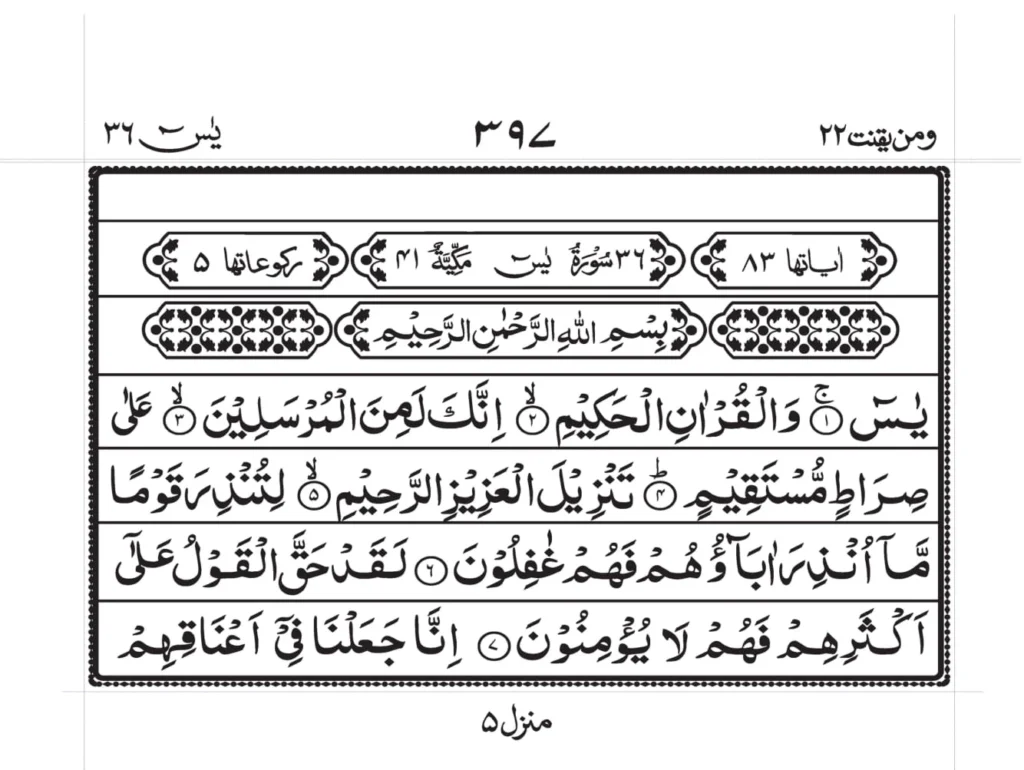
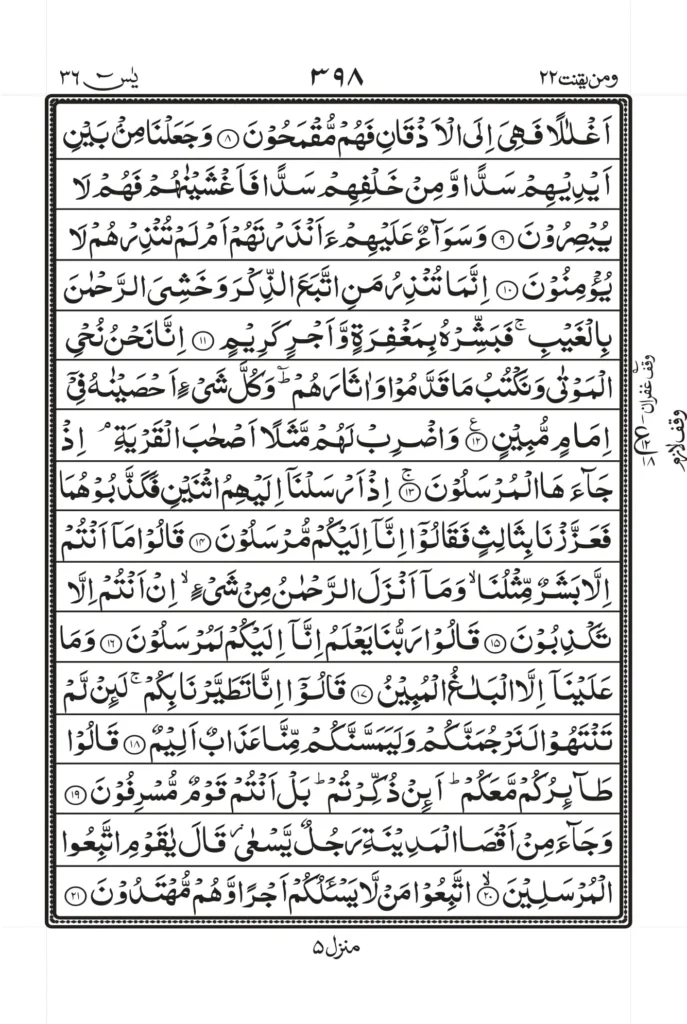
| يس ﴿١﴾ |
| Yā Sīn |
| Ya Seen. |
| وَالْقُرْآنِ الْحَكِيمِ ﴿٢﴾ |
| Wal-Qur’ānil-ḥakīm |
| By the Wise Qur’an, |
| إِنَّكَ لَمِنَ الْمُرْسَلِينَ ﴿٣﴾ |
| Innaka laminal-mursalīn |
| Indeed, you are among the messengers, |
| عَلَىٰ صِرَاطٍ مُّسْتَقِيمٍ ﴿٤﴾ |
| ‘Alā ṣirāṭim-mustaqīm |
| On a straight path. |
| تَنزِيلَ الْعَزِيزِ الرَّحِيمِ ﴿٥﴾ |
| Tanzīlal-‘Azīzir-Raḥīm |
| [This is] a revelation of the Exalted in Might, the Merciful, |
| لِتُنذِرَ قَوْمًا مَّا أُنذِرَ آبَاؤُهُمْ فَهُمْ غَافِلُونَ ﴿٦﴾ |
| Litundhira qawmam-mā undhira ābā’uhum fahum ghāfilūn |
| That you may warn a people whose forefathers were not warned, so they are unaware. |
| لَقَدْ حَقَّ الْقَوْلُ عَلَىٰ أَكْثَرِهِمْ فَهُمْ لَا يُؤْمِنُونَ ﴿٧﴾ |
| Laqad ḥaqqal-qawlu ‘alā aktharihim fahum lā yu’minūn |
| The word has already come into effect upon most of them, so they do not believe. |
| إِنَّا جَعَلْنَا فِي أَعْنَاقِهِمْ أَغْلَالًا فَهِيَ إِلَى الْأَذْقَانِ فَهُمْ مُّقْمَحُونَ ﴿٨﴾ |
| Innā ja‘alnā fī a‘nāqihim aghlālan fahiya ilal-adhqān fahum muqmaḥūn |
| Indeed, We have put shackles on their necks up to their chins, so their heads are forced up. |
| وَجَعَلْنَا مِن بَيْنِ أَيْدِيهِمْ سَدًّا وَمِنْ خَلْفِهِمْ سَدًّا فَأَغْشَيْنَاهُمْ فَهُمْ لَا يُبْصِرُونَ ﴿٩﴾ |
| Waja‘alnā mim bayni aydīhim saddanw wa min khalfihim saddan fa-aghshaynāhum fahum lā yubṣirūn |
| And We placed barriers before them and behind them and covered them, so they do not see. |
| وَسَوَاءٌ عَلَيْهِمْ أَأَنذَرْتَهُمْ أَمْ لَمْ تُنذِرْهُمْ لَا يُؤْمِنُونَ ﴿١٠﴾ |
| Wa sawā’un ‘alayhim a-andhartahum am lam tundhirhum lā yu’minūn |
| And it is all the same for them whether you warn them or not; they will not believe. |
| إِنَّمَا تُنذِرُ مَنِ اتَّبَعَ الذِّكْرَ وَخَشِيَ الرَّحْمَٰنَ بِالْغَيْبِ ۖ فَبَشِّرْهُ بِمَغْفِرَةٍ وَأَجْرٍ كَرِيمٍ ﴿١١﴾ |
| Innamā tundhiru manittaba‘adh-dhikra wa khashiyar-Raḥmāna bil-ghayb |
| You can only warn one who follows the Reminder and fears the Most Merciful unseen. |
| إِنَّا نَحْنُ نُحْيِي الْمَوْتَىٰ وَنَكْتُبُ مَا قَدَّمُوا وَآثَارَهُمْ ۚ وَكُلَّ شَيْءٍ أَحْصَيْنَاهُ فِي إِمَامٍ مُّبِينٍ ﴿١٢﴾ |
| Innā naḥnu nuḥyil-mawtā wa naktubu mā qaddamū wa āthārahum |
| Indeed, We give life to the dead and record what they put forth and what they leave behind. |
| وَاضْرِبْ لَهُم مَّثَلًا أَصْحَابَ الْقَرْيَةِ إِذْ جَاءَهَا الْمُرْسَلُونَ ﴿١٣﴾ |
| Waḍrib lahum mathalan aṣḥābal-qaryah |
| And present to them an example: the people of the city, when the messengers came to it. |
| إِذْ أَرْسَلْنَا إِلَيْهِمُ اثْنَيْنِ فَكَذَّبُوهُمَا فَعَزَّزْنَا بِثَالِثٍ فَقَالُوا إِنَّا إِلَيْكُم مُّرْسَلُونَ ﴿١٤﴾ |
| Idh arsalnā ilayhim ithnayn fakadhdhabūhumā fa‘azzaznā bithālith |
| When We sent to them two messengers, they denied them, so We strengthened them with a third, and they said, “Indeed, we are messengers to you.” |
| قَالُوا مَا أَنتُمْ إِلَّا بَشَرٌ مِّثْلُنَا وَمَا أَنزَلَ الرَّحْمَٰنُ مِن شَيْءٍ إِنْ أَنتُمْ إِلَّا تَكْذِبُونَ ﴿١٥﴾ |
| Qālū mā antum illā basharum mithlunā |
| They said, “You are only human beings like us, and the Most Merciful has not revealed anything. You are only lying.” |
| قَالُوا رَبُّنَا يَعْلَمُ إِنَّا إِلَيْكُمْ لَمُرْسَلُونَ ﴿١٦﴾ |
| Qālū rabbunā ya‘lamu innā ilaykum lamursalūn |
| They said, “Our Lord knows that we are truly messengers sent to you.” |
| وَمَا عَلَيْنَا إِلَّا الْبَلَاغُ الْمُبِينُ ﴿١٧﴾ |
| Wa mā ‘alaynā illal-balāghul-mubīn |
| And our duty is only to convey the message clearly. |
| قَالُوا إِنَّا تَطَيَّرْنَا بِكُمْ لَئِن لَّمْ تَنتَهُوا لَنَرْجُمَنَّكُمْ وَلَيَمَسَّنَّكُم مِّنَّا عَذَابٌ أَلِيمٌ ﴿١٨﴾ |
| Qālū innā taṭayyarnā bikum |
| They said, “We see you as an evil omen. If you do not stop, we will stone you, and you will suffer a painful punishment from us.” |
| قَالُوا طَائِرُكُم مَّعَكُمْ ۚ أَئِن ذُكِّرْتُم ۚ بَلْ أَنتُمْ قَوْمٌ مُّسْرِفُونَ ﴿١٩﴾ |
| Qālū ṭā’irukum ma‘akum |
| They said, “Your evil omen is with yourselves. You are a transgressing people.” |
| وَجَاءَ مِنْ أَقْصَى الْمَدِينَةِ رَجُلٌ يَسْعَىٰ قَالَ يَا قَوْمِ اتَّبِعُوا الْمُرْسَلِينَ ﴿٢٠﴾ |
| Wa jā’a min aqṣal-madīnati rajulun yas‘ā |
| And there came from the farthest end of the city a man running. He said, “O my people, follow the messengers.” |
| اتَّبِعُوا مَن لَّا يَسْأَلُكُمْ أَجْرًا وَهُم مُّهْتَدُونَ ﴿٢١﴾ |
| Ittabi‘ū man lā yas’alukum ajrā |
| Follow those who do not ask you for any reward and who are rightly guided. |
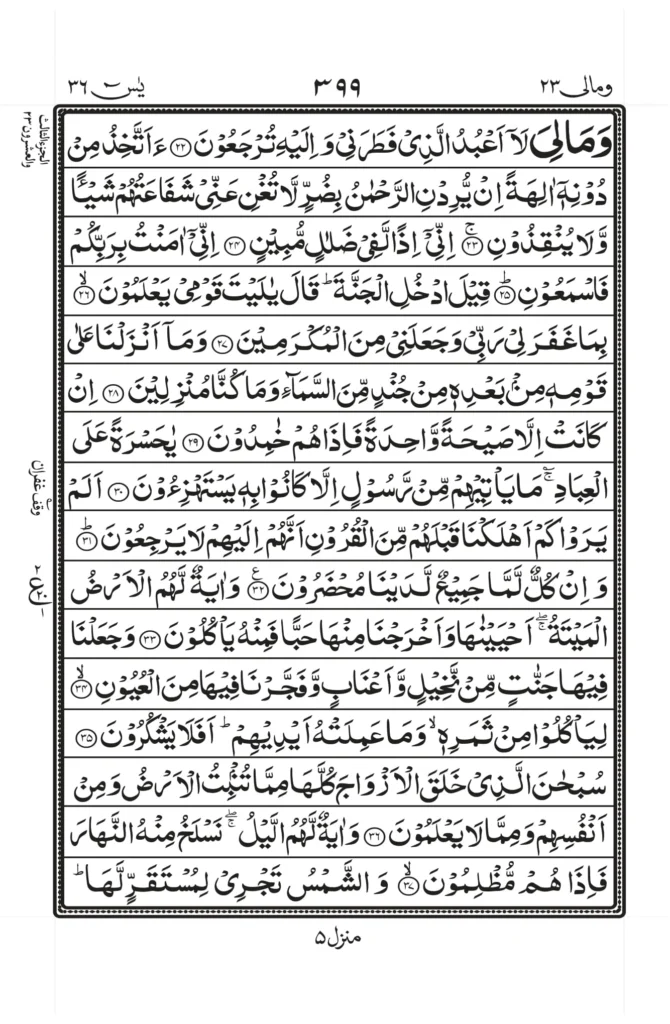
| وَمَا لِيَ لَا أَعْبُدُ الَّذِي فَطَرَنِي وَإِلَيْهِ تُرْجَعُونَ ﴿٢٢﴾ |
| Wa mā liya lā a‘budulladhī faṭaranī |
| And why should I not worship the One who created me, and to Him you will be returned? |
| أَأَتَّخِذُ مِن دُونِهِ آلِهَةً إِن يُرِدْنِ الرَّحْمَٰنُ بِضُرٍّ لَّا تُغْنِ عَنِّي شَفَاعَتُهُمْ شَيْئًا وَلَا يُنقِذُونِ ﴿٢٣﴾ |
| A-attakhidhu min dūnihi ālihah |
| Should I take gods besides Him? If the Most Merciful intends harm for me, their intercession will not benefit me at all. |
| إِنِّي إِذًا لَّفِي ضَلَالٍ مُّبِينٍ ﴿٢٤﴾ |
| Innī idhan lafī ḍalālin mubīn |
| Indeed, I would then be in clear error. |
| إِنِّي آمَنتُ بِرَبِّكُمْ فَاسْمَعُونِ ﴿٢٥﴾ |
| Innī āmantu birabbikum fasma‘ūn |
| Indeed, I have believed in your Lord, so listen to me. |
| قِيلَ ادْخُلِ الْجَنَّةَ ۖ قَالَ يَا لَيْتَ قَوْمِي يَعْلَمُونَ ﴿٢٦﴾ |
| Qīladkhulil-jannah |
| It was said, “Enter Paradise.” He said, “I wish my people knew.” |
| بِمَا غَفَرَ لِي رَبِّي وَجَعَلَنِي مِنَ الْمُكْرَمِينَ ﴿٢٧﴾ |
| Bimā ghafara lī rabbī |
| Because my Lord has forgiven me and made me among the honored. |
| وَمَا أَنزَلْنَا عَلَىٰ قَوْمِهِ مِن بَعْدِهِ مِن جُندٍ مِّنَ السَّمَاءِ وَمَا كُنَّا مُنزِلِينَ ﴿٢٨﴾ |
| Wa mā anzalnā ‘alā qawmihī |
| And We did not send down upon his people after him any soldiers from the heaven. |
| إِن كَانَتْ إِلَّا صَيْحَةً وَاحِدَةً فَإِذَا هُمْ خَامِدُونَ ﴿٢٩﴾ |
| In kānat illā ṣayḥatan wāḥidah |
| It was but one blast, and immediately they were extinguished. |
| يَا حَسْرَةً عَلَى الْعِبَادِ ۚ مَا يَأْتِيهِم مِّن رَّسُولٍ إِلَّا كَانُوا بِهِ يَسْتَهْزِئُونَ ﴿٣٠﴾ |
| Yā ḥasratan ‘alal-‘ibād |
| Oh, regret over the servants! No messenger comes to them except they mock him. |
| أَلَمْ يَرَوْا كَمْ أَهْلَكْنَا قَبْلَهُم مِّنَ الْقُرُونِ أَنَّهُمْ إِلَيْهِمْ لَا يَرْجِعُونَ ﴿٣١﴾ |
| Alam yaraw kam ahlaknā |
| Have they not seen how many generations We destroyed before them? |
| وَإِن كُلٌّ لَّمَّا جَمِيعٌ لَّدَيْنَا مُحْضَرُونَ ﴿٣٢﴾ |
| Wa in kullun lammā jamī‘ |
| And indeed, all of them will be brought before Us. |
| وَآيَةٌ لَّهُمُ الْأَرْضُ الْمَيْتَةُ أَحْيَيْنَاهَا وَأَخْرَجْنَا مِنْهَا حَبًّا فَمِنْهُ يَأْكُلُونَ ﴿٣٣﴾ |
| Wa āyatun lahumul-arḍul-maytah |
| And a sign for them is the dead earth: We give it life and bring forth grain. |
| وَجَعَلْنَا فِيهَا جَنَّاتٍ مِّن نَّخِيلٍ وَأَعْنَابٍ وَفَجَّرْنَا فِيهَا مِنَ الْعُيُونِ ﴿٣٤﴾ |
| Wa ja‘alnā fīhā jannātin min nakhīlin wa a‘nāb |
| And We placed therein gardens of palm trees and grapevines and caused springs to gush forth within them, |
| لِيَأْكُلُوا مِن ثَمَرِهِ وَمَا عَمِلَتْهُ أَيْدِيهِمْ ۖ أَفَلَا يَشْكُرُونَ ﴿٣٥﴾ |
| Liya’kulū min thamarihī wa mā ‘amilat-hu aydīhim |
| So that they may eat of its fruit. And their hands did not produce it—will they not then be grateful? |
| سُبْحَانَ الَّذِي خَلَقَ الْأَزْوَاجَ كُلَّهَا مِمَّا تُنبِتُ الْأَرْضُ وَمِنْ أَنفُسِهِمْ وَمِمَّا لَا يَعْلَمُونَ ﴿٣٦﴾ |
| Subḥānal-ladhī khalaqal-azwāja kullahā |
| Exalted is He who created all pairs—from what the earth grows and from themselves and from that which they do not know. |
| وَآيَةٌ لَّهُمُ اللَّيْلُ نَسْلَخُ مِنْهُ النَّهَارَ فَإِذَا هُم مُّظْلِمُونَ ﴿٣٧﴾ |
| Wa āyatun lahumul-layl |
| And a sign for them is the night: We remove from it the daylight, and behold—they are in darkness. |
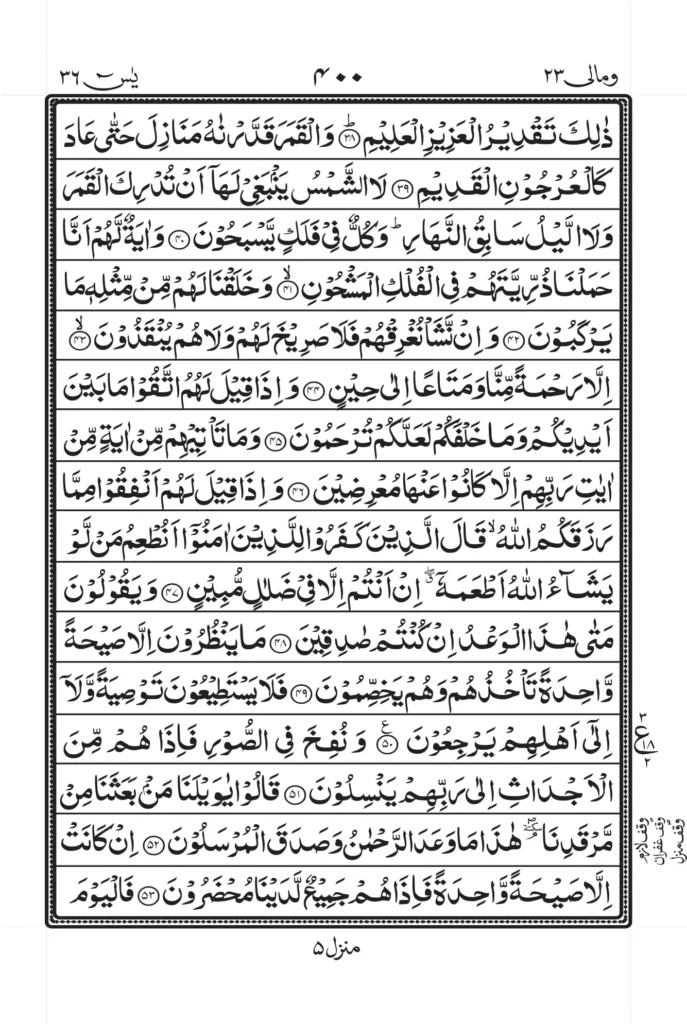
| وَالشَّمْسُ تَجْرِي لِمُسْتَقَرٍّ لَّهَا ۚ ذَٰلِكَ تَقْدِيرُ الْعَزِيزِ الْعَلِيمِ ﴿٣٨﴾ |
| Wash-shamsu tajrī limustaqarril-lahā |
| And the sun runs on its fixed course. That is the decree of the Almighty, the All-Knowing. |
| وَالْقَمَرَ قَدَّرْنَاهُ مَنَازِلَ حَتَّىٰ عَادَ كَالْعُرْجُونِ الْقَدِيمِ ﴿٣٩﴾ |
| Wal-qamara qaddarnāhu manāzil |
| And the moon—We have determined for it phases until it returns like an old date stalk. |
| لَا الشَّمْسُ يَنبَغِي لَهَا أَن تُدْرِكَ الْقَمَرَ وَلَا اللَّيْلُ سَابِقُ النَّهَارِ ۚ وَكُلٌّ فِي فَلَكٍ يَسْبَحُونَ ﴿٤٠﴾ |
| Lash-shamsu yanbaghī lahā an tudrikal-qamar |
| It is not for the sun to overtake the moon, nor does the night outstrip the day. Each floats in its orbit. |
| وَآيَةٌ لَّهُمْ أَنَّا حَمَلْنَا ذُرِّيَّتَهُمْ فِي الْفُلْكِ الْمَشْحُونِ ﴿٤١﴾ |
| Wa āyatun lahum annā ḥamalnā dhurriyyatahum |
| And a sign for them is that We carried their descendants in the laden ship. |
| وَخَلَقْنَا لَهُم مِّن مِّثْلِهِ مَا يَرْكَبُونَ ﴿٤٢﴾ |
| Wa khalaqnā lahum mim mithlihī |
| And We created for them from its like that which they ride. |
| وَإِن نَّشَأْ نُغْرِقْهُمْ فَلَا صَرِيخَ لَهُمْ وَلَا هُمْ يُنقَذُونَ ﴿٤٣﴾ |
| Wa in nasha’ nughriqhum |
| And if We willed, We could drown them; then no one could rescue them. |
| إِلَّا رَحْمَةً مِّنَّا وَمَتَاعًا إِلَىٰ حِينٍ ﴿٤٤﴾ |
| Illā raḥmatan minnā |
| Except as a mercy from Us and provision for a time. |
| وَإِذَا قِيلَ لَهُمُ اتَّقُوا مَا بَيْنَ أَيْدِيكُمْ وَمَا خَلْفَكُمْ لَعَلَّكُمْ تُرْحَمُونَ ﴿٤٥﴾ |
| Wa idhā qīla lahumut-taqū |
| And when it is said to them, “Fear what is before you and what is behind you,” that you may receive mercy. |
| وَمَا تَأْتِيهِم مِّنْ آيَةٍ مِّنْ آيَاتِ رَبِّهِمْ إِلَّا كَانُوا عَنْهَا مُعْرِضِينَ ﴿٤٦﴾ |
| Wa mā ta’tīhim min āyah |
| And no sign comes to them from the signs of their Lord except they turn away. |
| وَإِذَا قِيلَ لَهُمْ أَنفِقُوا مِمَّا رَزَقَكُمُ اللَّهُ قَالَ الَّذِينَ كَفَرُوا لِلَّذِينَ آمَنُوا أَنُطْعِمُ مَن لَّوْ يَشَاءُ اللَّهُ أَطْعَمَهُ إِنْ أَنتُمْ إِلَّا فِي ضَلَالٍ مُّبِينٍ ﴿٤٧﴾ |
| Wa idhā qīla lahum anfiqū |
| And when it is said to them, “Spend from what Allah has provided you,” the disbelievers say to the believers, “Should we feed those whom Allah could have fed?” |
| وَيَقُولُونَ مَتَىٰ هَٰذَا الْوَعْدُ إِن كُنتُمْ صَادِقِينَ ﴿٤٨﴾ |
| Wa yaqūlūna matā hādhā al-wa‘d |
| And they say, “When is this promise, if you are truthful?” |
| مَا يَنظُرُونَ إِلَّا صَيْحَةً وَاحِدَةً تَأْخُذُهُمْ وَهُمْ يَخِصِّمُونَ ﴿٤٩﴾ |
| Mā yanẓurūna illā ṣayḥatan wāḥidah |
| They await only one blast which will seize them while they are disputing. |
| فَلَا يَسْتَطِيعُونَ تَوْصِيَةً وَلَا إِلَىٰ أَهْلِهِمْ يَرْجِعُونَ ﴿٥٠﴾ |
| Falā yastaṭī‘ūna tawṣiyah |
| They will not be able to make a bequest, nor will they return to their families. |
| وَنُفِخَ فِي الصُّورِ فَإِذَا هُم مِّنَ الْأَجْدَاثِ إِلَىٰ رَبِّهِمْ يَنسِلُونَ ﴿٥١﴾ |
| Wa nufikha fiṣ-ṣūr |
| And the Trumpet will be blown, and at once they will come forth from the graves to their Lord. |
| قَالُوا يَا وَيْلَنَا مَن بَعَثَنَا مِن مَّرْقَدِنَا ۜ هَٰذَا مَا وَعَدَ الرَّحْمَٰنُ وَصَدَقَ الْمُرْسَلُونَ ﴿٥٢﴾ |
| Qālū yā waylanā man ba‘athanā |
| They will say, “Woe to us! Who has raised us from our resting place?” This is what the Most Merciful promised. |
| إِن كَانَتْ إِلَّا صَيْحَةً وَاحِدَةً فَإِذَا هُمْ جَمِيعٌ لَّدَيْنَا مُحْضَرُونَ ﴿٥٣﴾ |
| In kānat illā ṣayḥatan wāḥidah |
| It will be but one blast, and at once they will all be brought before Us. |
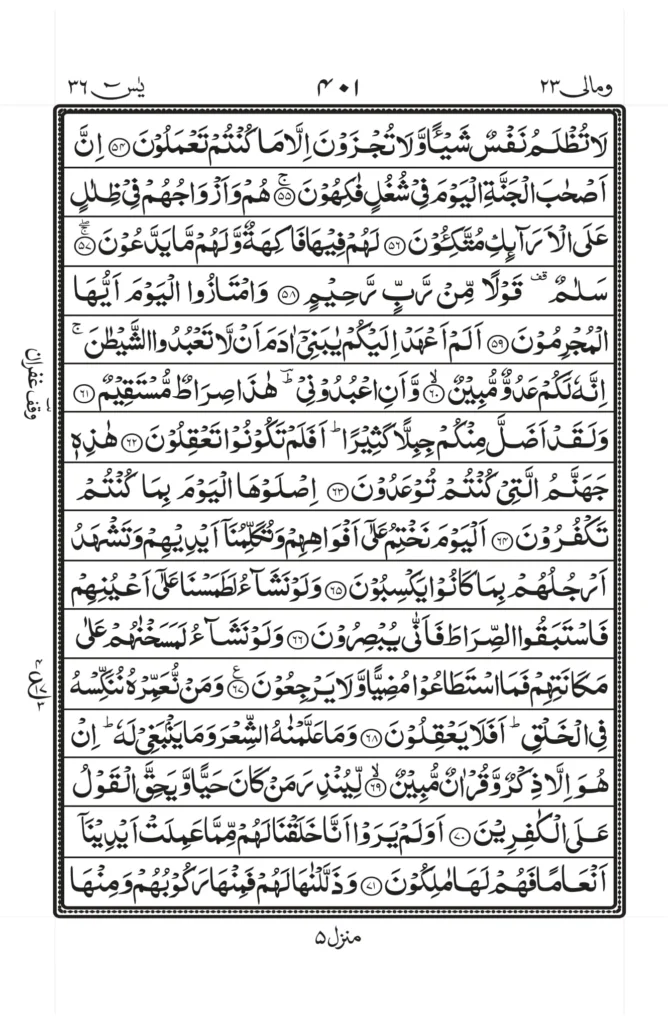
| فَالْيَوْمَ لَا تُظْلَمُ نَفْسٌ شَيْئًا وَلَا تُجْزَوْنَ إِلَّا مَا كُنتُمْ تَعْمَلُونَ ﴿٥٤﴾ |
| Fal-yawma lā tuẓlamu nafsun shay’ā |
| So today no soul will be wronged at all, nor will you be recompensed except for what you used to do. |
| إِنَّ أَصْحَابَ الْجَنَّةِ الْيَوْمَ فِي شُغُلٍ فَاكِهُونَ ﴿٥٥﴾ |
| Inna aṣḥābal-jannatil-yawm |
| Indeed, the companions of Paradise today will be busy in joyful occupation. |
| هُمْ وَأَزْوَاجُهُمْ فِي ظِلَالٍ عَلَى الْأَرَائِكِ مُتَّكِئُونَ ﴿٥٦﴾ |
| Hum wa azwājuhum fī ẓilāl |
| They and their spouses will be reclining on couches in shade. |
| لَهُمْ فِيهَا فَاكِهَةٌ وَلَهُم مَّا يَدَّعُونَ ﴿٥٧﴾ |
| Lahum fīhā fākihah |
| For them therein is fruit, and for them is whatever they request. |
| سَلَامٌ قَوْلًا مِّن رَّبٍّ رَّحِيمٍ ﴿٥٨﴾ |
| Salāmun qawlan mir rabbir-raḥīm |
| “Peace,” a word from a Merciful Lord. |
| وَامْتَازُوا الْيَوْمَ أَيُّهَا الْمُجْرِمُونَ ﴿٥٩﴾ |
| Wamtāzūl-yawma ayyuhal-mujrimūn |
| But stand apart today, you criminals. |
| أَلَمْ أَعْهَدْ إِلَيْكُمْ يَا بَنِي آدَمَ أَن لَّا تَعْبُدُوا الشَّيْطَانَ ۖ إِنَّهُ لَكُمْ عَدُوٌّ مُّبِينٌ ﴿٦٠﴾ |
| Alam a‘had ilaykum yā banī Ādam |
| Did I not command you, O children of Adam, that you not worship Satan? Indeed, he is to you a clear enemy. |
| وَأَنِ اعْبُدُونِي ۚ هَٰذَا صِرَاطٌ مُّسْتَقِيمٌ ﴿٦١﴾ |
| Wa ani‘budūnī hādhā ṣirāṭun mustaqīm |
| And that you worship Me—this is a straight path. |
| وَلَقَدْ أَضَلَّ مِنكُمْ جِبِلًّا كَثِيرًا ۖ أَفَلَمْ تَكُونُوا تَعْقِلُونَ ﴿٦٢﴾ |
| Wa laqad aḍalla minkum jibillan kathīrā |
| And he already led astray from among you much of creation—did you not reason? |
| هَٰذِهِ جَهَنَّمُ الَّتِي كُنتُمْ تُوعَدُونَ ﴿٦٣﴾ |
| Hādhihi jahannamul-latī kuntum tū‘adūn |
| This is the Hellfire which you were promised. |
| اصْلَوْهَا الْيَوْمَ بِمَا كُنتُمْ تَكْفُرُونَ ﴿٦٤﴾ |
| Iṣlawhal-yawma bimā kuntum takfurūn |
| Enter it today for what you used to disbelieve. |
| الْيَوْمَ نَخْتِمُ عَلَىٰ أَفْوَاهِهِمْ وَتُكَلِّمُنَا أَيْدِيهِمْ وَتَشْهَدُ أَرْجُلُهُم بِمَا كَانُوا يَكْسِبُونَ ﴿٦٥﴾ |
| Al-yawma nakhtimu ‘alā afwāhihim |
| Today We will seal their mouths, and their hands will speak to Us. |
| وَلَوْ نَشَاءُ لَطَمَسْنَا عَلَىٰ أَعْيُنِهِمْ فَاسْتَبَقُوا الصِّرَاطَ فَأَنَّىٰ يُبْصِرُونَ ﴿٦٦﴾ |
| Wa law nashā’u laṭamasnā ‘alā a‘yunihim |
| If We willed, We could blind their eyes. |
| وَلَوْ نَشَاءُ لَمَسَخْنَاهُمْ عَلَىٰ مَكَانَتِهِمْ فَمَا اسْتَطَاعُوا مُضِيًّا وَلَا يَرْجِعُونَ ﴿٦٧﴾ |
| Wa law nashā’u lamasakhnāhum |
| And if We willed, We could have deformed them. |
| وَمَن نُّعَمِّرْهُ نُنَكِّسْهُ فِي الْخَلْقِ ۖ أَفَلَا يَعْقِلُونَ ﴿٦٨﴾ |
| Wa man nu‘ammirhu nunakkishu |
| And whoever We grant long life—We reverse him in creation. |
| وَمَا عَلَّمْنَاهُ الشِّعْرَ وَمَا يَنبَغِي لَهُ ۚ إِنْ هُوَ إِلَّا ذِكْرٌ وَقُرْآنٌ مُّبِينٌ ﴿٦٩﴾ |
| Wa mā ‘allamnāhush-shi‘r |
| And We did not teach him poetry. |
| لِّيُنذِرَ مَن كَانَ حَيًّا وَيَحِقَّ الْقَوْلُ عَلَى الْكَافِرِينَ ﴿٧٠﴾ |
| Liyundhira man kāna ḥayyā |
| To warn whoever is alive. |
| أَوَلَمْ يَرَوْا أَنَّا خَلَقْنَا لَهُم مِّمَّا عَمِلَتْ أَيْدِينَا أَنْعَامًا فَهُمْ لَهَا مَالِكُونَ ﴿٧١﴾ |
| Awa lam yaraw annā khalaqnā |
| Have they not seen that We created livestock for them? |
| وَذَلَّلْنَاهَا لَهُمْ فَمِنْهَا رَكُوبُهُمْ وَمِنْهَا يَأْكُلُونَ ﴿٧٢﴾ |
| Wa dhallalnāhā lahum |
| And We subdued them for them. |
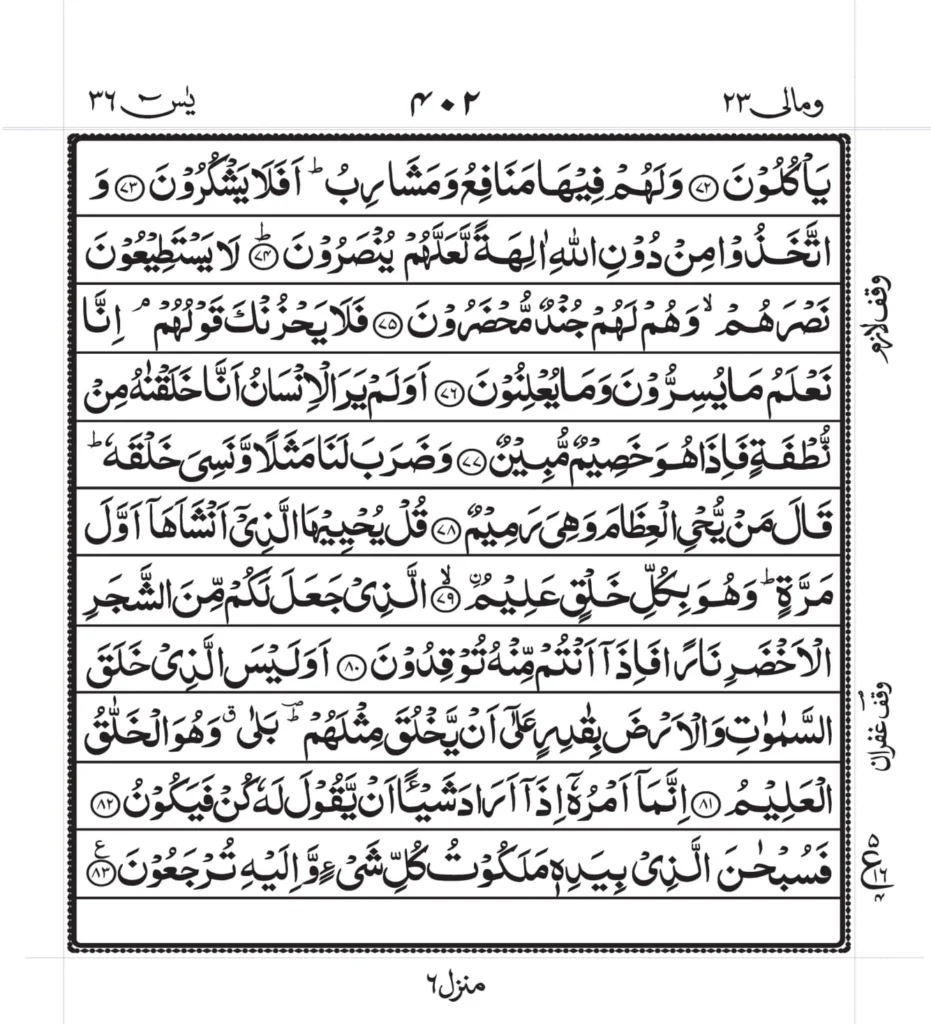
| وَلَهُمْ فِيهَا مَنَافِعُ وَمَشَارِبُ ۖ أَفَلَا يَشْكُرُونَ ﴿٧٣﴾ |
| Wa lahum fīhā manāfi‘ |
| And for them therein are benefits and drinks. |
| وَاتَّخَذُوا مِن دُونِ اللَّهِ آلِهَةً لَّعَلَّهُمْ يُنصَرُونَ ﴿٧٤﴾ |
| Wattakhadhū min dūnillāhi ālihah |
| But they have taken gods besides Allah. |
| لَا يَسْتَطِيعُونَ نَصْرَهُمْ وَهُمْ لَهُمْ جُندٌ مُّحْضَرُونَ ﴿٧٥﴾ |
| Lā yastaṭī‘ūna naṣrahum |
| They cannot help them. |
| فَلَا يَحْزُنكَ قَوْلُهُمْ ۘ إِنَّا نَعْلَمُ مَا يُسِرُّونَ وَمَا يُعْلِنُونَ ﴿٧٦﴾ |
| Falā yaḥzunka qawluhum |
| So let not their words grieve you. |
| أَوَلَمْ يَرَ الْإِنسَانُ أَنَّا خَلَقْنَاهُ مِن نُّطْفَةٍ فَإِذَا هُوَ خَصِيمٌ مُّبِينٌ ﴿٧٧﴾ |
| Awa lam yaral-insān |
| Does man not consider that We created him? |
| وَضَرَبَ لَنَا مَثَلًا وَنَسِيَ خَلْقَهُ ۖ قَالَ مَن يُحْيِي الْعِظَامَ وَهِيَ رَمِيمٌ ﴿٧٨﴾ |
| Wa ḍaraba lanā mathalan |
| And he presents for Us an example. |
| قُلْ يُحْيِيهَا الَّذِي أَنشَأَهَا أَوَّلَ مَرَّةٍ ۖ وَهُوَ بِكُلِّ خَلْقٍ عَلِيمٌ ﴿٧٩﴾ |
| Qul yuḥyīhalladhī ansha’ahā |
| Say, He will give them life who produced them. |
| الَّذِي جَعَلَ لَكُم مِّنَ الشَّجَرِ الْأَخْضَرِ نَارًا فَإِذَا أَنتُم مِّنْهُ تُوقِدُونَ ﴿٨٠﴾ |
| Alladhī ja‘ala lakum |
| He who made fire for you from the green tree. |
| أَوَلَيْسَ الَّذِي خَلَقَ السَّمَاوَاتِ وَالْأَرْضَ بِقَادِرٍ عَلَىٰ أَن يَخْلُقَ مِثْلَهُم ۚ بَلَىٰ وَهُوَ الْخَلَّاقُ الْعَلِيمُ ﴿٨١﴾ |
| Awa laysa alladhī khalaqas-samāwāt |
| Is not He who created the heavens and the earth able? |
| إِنَّمَا أَمْرُهُ إِذَا أَرَادَ شَيْئًا أَن يَقُولَ لَهُ كُن فَيَكُونُ ﴿٨٢﴾ |
| Innamā amruhu idhā arāda shay’an |
| His command is only when He intends a thing. |
| فَسُبْحَانَ الَّذِي بِيَدِهِ مَلَكُوتُ كُلِّ شَيْءٍ وَإِلَيْهِ تُرْجَعُونَ ﴿٨٣﴾ |
| Fa subḥānalladhī biyadihī malakūtu |
| So exalted is He in whose hand is the dominion of all things. |
Surah Yaseen – Full English Transliteration
Complete transliteration of Surah Yaseen (36), ayah by ayah, in correct Quranic order from 1 to 83.
| 1. Yā Sīn |
| 2. Wal-qur’ānil-ḥakīm |
| 3. Innaka laminal-mursalīn |
| 4. ‘Alā ṣirāṭim-mustaqīm |
| 5. Tanzīlal-‘azīzir-raḥīm |
| 6. Litundhira qawmam mā undhira ābā’uhum fahum ghāfilūn |
| 7. Laqad ḥaqqal-qawlu ‘alā aktharihim fahum lā yu’minūn |
| 8. Innā ja‘alnā fī a‘nāqihim aghlālan fahya ilal-adhqāni fahum muqmaḥūn |
| 9. Wa ja‘alnā min bayni aydīhim saddan wa min khalfihim saddan fa-aghshaynāhum fahum lā yubṣirūn |
| 10. Wa sawā’un ‘alayhim a-andhartahum am lam tundhirhum lā yu’minūn |
| 11. Innāmā tundhiru man ittaba‘adh-dhikra wa khashiyar-raḥmāna bil-ghayb fa bashshirhu bimaghfiratin wa ajrin karīm |
| 12. Innā naḥnu nuḥyil-mawtā wa naktubu mā qaddamū wa āthārahum wa kulla shay’in aḥṣaynāhu fī imāmin mubīn |
| 13. Waḍrib lahum mathalan aṣḥābal-qaryah idh jā’ahal-mursalūn |
| 14. Idh arsalnā ilayhim ithnayn fakadhdhabūhumā fa‘azzaznā bithālith faqālū innā ilaykum mursalūn |
| 15. Qālū mā antum illā basharum mithlunā wa mā anzalar-raḥmānu min shay’in in antum illā takdhibūn |
| 16. Qālū rabbunā ya‘lamu innā ilaykum lamursalūn |
| 17. Wa mā ‘alaynā illal-balāghul-mubīn |
| 18. Qālū innā taṭayyarnā bikum la’in lam tantahū lanarjumannakum wa layamassannakum minnā ‘adhābun alīm |
| 19. Qālū ṭā’irukum ma‘akum a-in dhukkirtum bal antum qawmum musrifūn |
| 20. Wa jā’a min aqṣal-madīnati rajulun yas‘ā qāla yā qawmit-tabi‘ul-mursalīn |
| 21. Ittabi‘ū man lā yas’alukum ajran wa hum muhtadūn |
| 22. Wa mā liya lā a‘budulladhī faṭaranī wa ilayhi turja‘ūn |
| 23. A-attakhidhu min dūnihi ālihatan in yuridnir-raḥmānu biḍurril-lā tughni ‘annī shafā‘atuhum shay’an wa lā yunqidhūn |
| 24. Innī idhan la fī ḍalālim mubīn |
| 25. Innī āmantu birabbikum fasma‘ūn |
| 26. Qīlad-khulil-jannah qāla yā layta qawmī ya‘lamūn |
| 27. Bimā ghafara lī rabbī wa ja‘alanī minal-mukramīn |
| 28. Wa mā anzalnā ‘alā qawmihi min ba‘dihī min jundim minas-samā’i wa mā kunnā munzilīn |
| 29. In kānat illā ṣayḥatan wāḥidatan fa-idhā hum khāmidūn |
| 30. Yā ḥasratan ‘alal-‘ibād mā ya’tīhim mir-rasūlin illā kānū bihī yastahzi’ūn |
| 31. A-lam yaraw kam ahlaknā qablahum minal-qurūni annahum ilayhim lā yarji‘ūn |
| 32. Wa in kullun lammā jamī‘un ladaynā muḥḍarūn |
| 33. Wa āyatun lahumul-arḍul-maytatu aḥyaynāhā wa akhrajnā minhā ḥabban faminhu ya’kulūn |
| 34. Wa ja‘alnā fīhā jannātin min nakhīlin wa a‘nābin wa fajjarnā fīhā minal-‘uyūn |
| 35. Liya’kulū min thamarihī wa mā ‘amilathu aydīhim afalā yashkurūn |
| 36. Subḥānalladhī khalaqal-azwāja kullahā mimmā tunbitul-arḍu wa min anfusihim wa mimmā lā ya‘lamūn |
| 37. Wa āyatun lahumul-laylu naslakhu minhun-nahāra fa-idhā hum muẓlimūn |
| 38. Wash-shamsu tajrī limustaqarril-lahā dhālika taqdīrul-‘azīzil-‘alīm |
| 39. Wal-qamara qaddarnāhu manāzila ḥattā ‘āda kal-‘urjūnil-qadīm |
| 40. Lash-shamsu yanbaghī lahā an tudrikal-qamara wa lal-laylu sābiqun-nahār wa kullun fī falakin yasbaḥūn |
| 41. Wa āyatun lahum annā ḥamalnā dhurriyyatahum fil-fulkil-mashḥūn |
| 42. Wa khalaqnā lahum mim mithlihī mā yarkabūn |
| 43. Wa in nasha’ nughriqhum fa lā ṣarīkha lahum wa lā hum yunqadhūn |
| 44. Illā raḥmatan minnā wa matā‘an ilā ḥīn |
| 45. Wa idhā qīla lahum ittaqū mā bayna aydīkum wa mā khalfakum la‘allakum turḥamūn |
| 46. Wa mā ta’tīhim min āyatin min āyāti rabbihim illā kānū ‘anhā mu‘riḍīn |
| 47. Wa idhā qīla lahum anfiqū mimmā razaqakumullāhu qālalladhīna kafarū lilladhīna āmanū a-nuṭ‘imu man law yashā’ullāhu aṭ‘amahū in antum illā fī ḍalālim mubīn |
| 48. Wa yaqūlūna matā hādhāl-wa‘du in kuntum ṣādiqīn |
| 49. Mā yanẓurūna illā ṣayḥatan wāḥidatan ta’khudhuhum wa hum yakhiṣṣimūn |
| 50. Fa lā yastaṭī‘ūna tawṣiyatan wa lā ilā ahlihim yarji‘ūn |
| 51. Wa nufikha fiṣ-ṣūri fa-idhā hum minal-ajdāthi ilā rabbihim yansilūn |
| 52. Qālū yā waylanā man ba‘athanā min marqadinā hādhā mā wa‘adar-raḥmānu wa ṣadaqal-mursalūn |
| 53. In kānat illā ṣayḥatan wāḥidatan fa-idhā hum jamī‘un ladaynā muḥḍarūn |
| 54. Fal-yawma lā tuẓlamu nafsun shay’an wa lā tujzawna illā mā kuntum ta‘malūn |
| 55. Inna aṣḥābal-jannatil-yawma fī shughulin fākihūn |
| 56. Hum wa azwājuhum fī ẓilālin ‘alal-arā’iki muttaki’ūn |
| 57. Lahum fīhā fākihatun wa lahum mā yadda‘ūn |
| 58. Salāmun qawlan mir-rabbin raḥīm |
| 59. Wamtāzul-yawma ayyuhal-mujrimūn |
| 60. A-lam a‘had ilaykum yā banī ādam an lā ta‘budush-shayṭān innahū lakum ‘aduwwun mubīn |
| 61. Wa ani‘budūnī hādhā ṣirāṭun mustaqīm |
| 62. Wa laqad aḍalla minkum jibillan kathīrā afalam takūnū ta‘qilūn |
| 63. Hādhihi jahannamul-latī kuntum tū‘adūn |
| 64. Iṣlawhal-yawma bimā kuntum takfurūn |
| 65. Al-yawma nakhtimu ‘alā afwāhihim wa tukallimunā aydīhim wa tashhadu arjuluhum bimā kānū yaksibūn |
| 66. Wa law nashā’u laṭamasnā ‘alā a‘yunihim fastabaquṣ-ṣirāṭa fa-annā yubṣirūn |
| 67. Wa law nashā’u lamasakhnāhum ‘alā makānatihim famā staṭā‘ū muḍiyyan wa lā yarji‘ūn |
| 68. Wa man nu‘ammirhu nunakkishu fil-khalq afalā ya‘qilūn |
| 69. Wa mā ‘allamnāhush-shi‘ra wa mā yanbaghī lah in huwa illā dhikrun wa qur’ānum mubīn |
| 70. Liyundhira man kāna ḥayyā wa yaḥiqqal-qawlu ‘alal-kāfirīn |
| 71. Awa lam yaraw annā khalaqnā lahum mimmā ‘amilat aydīnā an‘āman fahum lahā mālikūn |
| 72. Wa dhallalnāhā lahum faminhā ركوبهم wa minhā ya’kulūn |
| 73. Wa lahum fīhā manāfi‘u wa mashārib afalā yashkurūn |
| 74. Wattakhadhū min dūnillāhi ālihatal-la‘allahum yunṣarūn |
| 75. Lā yastaṭī‘ūna naṣrahum wa hum lahum jundum muḥḍarūn |
| 76. Falā yaḥzunka qawluhum innā na‘lamu mā yusirrūna wa mā yu‘linūn |
| 77. Awa lam yaral-insānu annā khalaqnāhu min nuṭfatin fa-idhā huwa khaṣīmun mubīn |
| 78. Wa ḍaraba lanā mathalan wa nasiya khalqah qāla man yuḥyil-‘iẓāma wa hiya ramīm |
| 79. Qul yuḥyīhalladhī ansha’ahā awwala marratin wa huwa bikulli khalqin ‘alīm |
| 80. Alladhī ja‘ala lakum minash-shajaril-akhḍari nāran fa-idhā antum minhu tūqidūn |
| 81. Awa laysa alladhī khalaqas-samāwāti wal-arḍa biqādirin ‘alā an yakhluqa mithlahum balā wa huwal-khallāqul-‘alīm |
| 82. Innamā amruhu idhā arāda shay’an an yaqūla lahū kun fa-yakūn |
| 83. Fa subḥānalladhī biyadihī malakūtu kulli shay’in wa ilayhi turja‘ūn |
Surah Yaseen – Full English Translation
(1) Yā Sīn.
(2) By the Wise Qur’an,
(3) Indeed, you are among the messengers,
(4) On a straight path.
(5) A revelation from the Almighty, the Most Merciful,
(6) So that you may warn a people whose forefathers were not warned, and so they are heedless.
(7) The word has already come into effect upon most of them, so they do not believe.
(8) Indeed, We have placed shackles around their necks up to their chins, so their heads are forced up.
(9) And We have placed before them a barrier and behind them a barrier and covered them, so they do not see.
(10) And it is the same for them whether you warn them or do not warn them—they will not believe.
(11) You can only warn one who follows the Reminder and fears the Most Merciful unseen. So give him glad tidings of forgiveness and a noble reward.
(12) Indeed, We give life to the dead and record what they have sent ahead and their effects. And everything We have enumerated in a clear register.
(13) And present to them an example: the people of the city, when the messengers came to it.
(14) When We sent to them two messengers, but they denied them, so We strengthened them with a third, and they said, “Indeed, we are messengers to you.”
(15) They said, “You are not but human beings like us, and the Most Merciful has not revealed anything. You are only lying.”
(16) They said, “Our Lord knows that we are messengers to you,
(17) And we are only responsible for clear conveyance.”
(18) They said, “Indeed, we consider you a bad omen. If you do not desist, we will surely stone you, and a painful punishment will touch you from us.”
(19) They said, “Your bad omen is with yourselves. Is it because you are reminded? Rather, you are a transgressing people.”
(20) And there came from the farthest part of the city a man running. He said, “O my people, follow the messengers.
(21) Follow those who ask of you no payment, and they are rightly guided.
(22) And why should I not worship He who created me and to whom you will be returned?
(23) Should I take other than Him gods? If the Most Merciful intends for me harm, their intercession will not benefit me at all, nor can they save me.
(24) Indeed, then I would be in clear error.
(25) Indeed, I have believed in your Lord, so listen to me.”
(26) It was said, “Enter Paradise.” He said, “I wish my people knew
(27) Of how my Lord has forgiven me and placed me among the honored.”
(28) And We did not send down upon his people after him any soldiers from the heaven, nor would We have done so.
(29) It was but one shout, and immediately they were extinguished.
(30) How regretful for the servants! There did not come to them any messenger except that they used to ridicule him.
(31) Have they not seen how many generations We destroyed before them—that they to them will not return?
(32) And indeed, all of them will yet be brought before Us.
(33) And a sign for them is the dead earth. We have given it life and brought forth from it grain, and from it they eat.
(34) And We placed therein gardens of palm trees and grapevines and caused springs to gush forth within them,
(35) That they may eat of His fruit. And their hands did not produce it, so will they not be grateful?
(36) Exalted is He who created all pairs—from what the earth grows and from themselves and from that which they do not know.
(37) And a sign for them is the night. We remove from it the daylight, and behold, they are in darkness.
(38) And the sun runs on its fixed course. That is the decree of the Almighty, the All-Knowing.
(39) And the moon—We have determined for it phases until it returns like the old date stalk.
(40) It is not for the sun to overtake the moon, nor does the night outstrip the day. Each floats in its orbit.
(41) And a sign for them is that We carried their forefathers in the laden ship.
(42) And We created for them from the likes of it what they ride.
(43) And if We willed, We could drown them, and there would be no one to respond to their cry, nor would they be saved,
(44) Except as a mercy from Us and provision for a time.
(45) And when it is said to them, “Fear what is before you and what is behind you; perhaps you will receive mercy,”
(46) And no sign comes to them from the signs of their Lord except that they turn away from it.
(47) And when it is said to them, “Spend from what Allah has provided you,” those who disbelieve say to those who believe, “Should we feed one whom Allah would have fed if He willed? You are not but in clear error.”
(48) And they say, “When is this promise, if you should be truthful?”
(49) They do not await except one blast which will seize them while they are disputing.
(50) And they will not be able to make a bequest, nor will they return to their families.
(51) And the Horn will be blown; and at once from the graves to their Lord they will hasten.
(52) They will say, “O woe to us! Who has raised us from our sleeping place?” This is what the Most Merciful had promised, and the messengers told the truth.
(53) It was but one blast, and at once they were all brought present before Us.
(54) So today no soul will be wronged at all, nor will you be recompensed except for what you used to do.
(55) Indeed, the companions of Paradise today are in joyful occupation,
(56) They and their spouses—in shade, reclining on adorned couches.
(57) For them therein is fruit, and for them is whatever they request.
(58) “Peace,” a word from a Merciful Lord.
(59) But stand apart today, you criminals.
(60) Did I not command you, O children of Adam, that you not worship Satan for indeed, he is to you a clear enemy
(61) And that you worship Me? This is a straight path.
(62) And he had already led astray from among you much of creation, so did you not use reason?
(63) This is the Hellfire which you were promised.
(64) Enter it today because you used to disbelieve.
(65) Today We will seal their mouths, and their hands will speak to Us, and their feet will testify about what they used to earn.
(66) And if We had willed, We could have obliterated their eyes, and they would race to the path, but how could they see?
(67) And if We had willed, We could have transformed them in their places so they could neither proceed nor return.
(68) And he to whom We grant long life We reverse in creation; so will they not understand?
(69) And We did not teach him poetry, nor is it befitting for him. It is only a reminder and a clear Qur’an,
(70) To warn whoever is alive and justify the word against the disbelievers.
(71) Do they not see that We have created for them from what Our hands have made grazing livestock, and they are their owners?
(72) And We have tamed them for them, so some of them they ride, and some of them they eat.
(73) And for them therein are benefits and drinks, so will they not be grateful?
(74) And they have taken besides Allah false gods that perhaps they would be helped.
(75) They are unable to help them, and they are for them soldiers in attendance.
(76) So let not their speech grieve you. Indeed, We know what they conceal and what they declare.
(77) Does man not consider that We created him from a sperm-drop—then at once he is a clear adversary?
(78) And he presents for Us an example and forgets his creation. He says, “Who will give life to bones while they are disintegrated?”
(79) Say, “He will give them life who produced them the first time; and He is, of all creation, Knowing.”
(80) It is He who made for you from the green tree fire, and then from it you ignite.
(81) Is not He who created the heavens and the earth able to create the likes of them? Yes, and He is the Knowing Creator.
(82) His command is only when He intends a thing that He says to it, “Be,” and it is.
(83) So exalted is He in whose hand is the dominion of all things, and to Him you will be returned.
Surah Yaseen – Tafseer Ibn Kathir (Detailed & Verse-Linked)
Surah Yaseen is one of the most powerful Makki surahs, focusing on the truth of Prophethood, the reality of resurrection, and Allah’s absolute power. Ibn Kathir explains that this surah was revealed to strengthen the heart of the Prophet ﷺ and to warn those who rejected the message.
Ayah 1–5: Oath by the Wise Qur’an & Proof of Prophethood
Ibn Kathir explains that “Yā Sīn” is among the disjointed letters (ḥurūf muqaṭṭaʿāt), whose full meaning is known only to Allah. Allah then swears by the Wise Qur’an to emphasize its perfection, clarity, and divine origin. The oath confirms that Prophet Muhammad ﷺ is truly among the messengers, following a straight path revealed by Allah, the Almighty and Most Merciful. This establishes the foundation of the entire surah: the truth of revelation.
Ayah 6–10: Why Many People Reject Guidance
According to Ibn Kathir, these verses describe people whose hearts are sealed due to persistent disbelief. Although the Prophet ﷺ warns them, they remain heedless because their forefathers were not warned. The metaphor of shackles, barriers, and blindness shows spiritual blindness, not physical. Their refusal is not due to lack of evidence, but arrogance and stubbornness.
Ayah 11–12: Who Truly Benefits from the Qur’an
Ibn Kathir says true benefit comes to those who follow the Reminder and fear Allah unseen. Allah records every deed and even the effects people leave behind. This proves divine justice: nothing is lost, whether good or bad. Everything is preserved in the Clear Record (Lawḥ Maḥfūẓ).
Ayah 13–30: Story of the People of the Town
This story, according to Ibn Kathir, is a warning example. Allah sent messengers to a town (commonly identified as Antioch). The people rejected them, mocked them, and threatened them. A believing man came running from the farthest part of the city, sincerely advising his people to follow the messengers. When he was killed for his faith, Allah honored him by admitting him into Paradise immediately.
The man’s wish that his people knew of Allah’s forgiveness shows sincere concern even after death. Ibn Kathir highlights that Allah destroyed the rejecting nation with a single mighty blast, proving that Allah does not need armies to punish the disobedient.
Ayah 31–32: Lessons from Destroyed Nations
Allah reminds the Quraysh of past nations destroyed due to denial. Ibn Kathir explains that once destroyed, they do not return to worldly life, but all will be gathered before Allah on the Day of Judgment. This reinforces accountability.
Ayah 33–44: Signs of Allah’s Power in Creation
Ibn Kathir elaborates that Allah revives dead land just as He will resurrect the dead. Gardens, fruits, night and day, the sun, moon, ships, and seas are all signs of divine control. These verses refute disbelief by appealing to reason and observation. Allah alone controls the universe with perfect balance.
Ayah 45–47: Rejection Despite Clear Warnings
Despite repeated reminders, disbelievers turn away arrogantly. Ibn Kathir notes their hypocrisy when they refuse charity, arguing falsely that Allah could feed the poor Himself. This shows hardness of heart and lack of compassion.
Ayah 48–54: The Reality of Resurrection
Disbelievers mockingly ask when the promise will occur. Ibn Kathir explains that resurrection will happen suddenly with a single blast of the trumpet. People will rise confused, realizing the truth too late. On that Day, Allah’s justice will be perfect—no soul will be wronged.
Ayah 55–58: Bliss of the People of Paradise
These verses describe the joy, peace, and honor of Paradise. Ibn Kathir emphasizes that the greatest reward is Allah’s greeting of peace directly to the believers. This is higher than all physical pleasures.
Ayah 59–65: Separation of Believers and Criminals
Allah commands the criminals to separate. Ibn Kathir explains that limbs will testify against sinners when mouths are sealed. This proves that no denial or lying will help on Judgment Day.
Ayah 66–68: Allah’s Absolute Control Over Humans
If Allah willed, He could remove sight or transform people completely. Ibn Kathir explains aging as a sign of Allah’s power—humans weaken after strength, reminding them of resurrection.
Ayah 69–70: Qur’an Is Not Poetry
Allah refutes claims that the Prophet ﷺ was a poet. Ibn Kathir stresses that the Qur’an is divine revelation meant to warn the living and establish proof against disbelievers.
Ayah 71–76: Blessings of Livestock & False Gods
Allah reminds people of livestock benefits—food, transport, and comfort. Ibn Kathir explains that false gods cannot help their worshippers. The Prophet ﷺ is comforted not to grieve over rejection.
Ayah 77–83: Proof of Resurrection & Allah’s Supreme Power
A disbeliever mocks resurrection using decayed bones. Ibn Kathir clarifies that the One who created from nothing can recreate easily. Fire from green trees is cited as proof of divine power. The surah concludes by declaring Allah’s absolute dominion and the certainty of return to Him.
Surah Yaseen ends by sealing its central message: Allah alone has power over life, death, and resurrection, and all will return to Him for judgment.
Surah Yaseen – Deep Benefits & Lessons
1. Qur’an Is the Ultimate Proof of Truth
Surah Yaseen teaches that the Qur’an itself is a living miracle. Whoever approaches it sincerely finds guidance, while rejection comes only from arrogance, not lack of evidence.
2. Prophets Are Sent Out of Mercy
Allah sends messengers not to punish people, but to save them. Rejection of prophets is actually rejection of Allah’s mercy and wisdom.
3. Spiritual Blindness Is Worse Than Physical Blindness
Many people see with their eyes but remain blind in their hearts. Surah Yaseen shows that repeated sin and denial seal the heart until truth no longer enters.
4. True Guidance Requires Fear of Allah in Private
Real believers obey Allah even when no one is watching. Private consciousness of Allah is more valuable than public displays of faith.
5. Every Action Leaves a Permanent Trace
Not only deeds, but their effects continue to be recorded. Good or bad influence on others follows a person even after death.
6. Sincere Faith May Be Lonely
The believing man in the story stood alone against his nation. Surah Yaseen teaches that truth does not depend on numbers, but sincerity.
7. Martyrdom Is Immediate Honor, Not Loss
The believer was granted Paradise instantly. This shows that death in Allah’s path is not an end, but a promotion.
8. Allah’s Punishment Needs No Army
A single command is enough for Allah to destroy nations. Power belongs entirely to Him, not to numbers or technology.
9. Nature Is a Continuous Reminder of Resurrection
Dead land reviving, night turning into day, and celestial order all point clearly to life after death for those who reflect.
10. Ingratitude Blocks Understanding
People enjoy Allah’s blessings daily yet deny Him. Surah Yaseen shows that lack of gratitude hardens the heart.
11. Charity Reflects Faith, Stinginess Reflects Arrogance
Those who refuse to help the needy argue falsely against Allah’s decree. True belief produces generosity and mercy.
12. Resurrection Will Be Sudden and Unavoidable
The Day of Judgment will come without warning. Delay in repentance is dangerous because opportunity ends instantly.
13. Allah’s Justice Is Perfect and Absolute
No soul will be wronged even by an atom’s weight. Every person will see exactly what they earned.
14. The Greatest Reward Is Allah’s Pleasure
Beyond food and comfort of Paradise, Allah’s greeting of peace is the highest honor for believers.
15. Sins Cannot Be Hidden on Judgment Day
Hands, feet, and skin will testify when mouths are sealed. Truth will be spoken even against one’s will.
16. Aging Is a Silent Proof of Resurrection
Strength turning into weakness reminds humans that Allah controls life stages and can recreate after death.
17. Qur’an Is Guidance, Not Entertainment
It is not poetry or storytelling for pleasure. It is a serious warning meant to awaken living hearts.
18. False Gods Are Completely Helpless
Anything worshipped besides Allah cannot protect or benefit its followers. Dependence on them leads only to regret.
19. Creation from Nothing Proves Re-Creation
If Allah created humans from nothing, resurrecting bones is easy. Doubting resurrection is illogical.
20. Final Return Is Certain
Surah Yaseen closes by reminding that all dominion belongs to Allah, and every soul will return to Him alone.
Surah Yaseen – Frequently Asked Questions (FAQs)
Surah Yaseen summarizes the core message of the Qur’an Tawheed, Prophethood, and Resurrection. Its themes repeatedly revive faith and soften hardened hearts.
According to Ibn Kathir and majority scholars, Surah Yaseen is a Makki surah, revealed before migration, focusing on belief and the Hereafter.
Its main message is that Allah alone controls life and death, Muhammad ﷺ is a true messenger, and resurrection is certain.
Those who fear Allah unseen and approach the Qur’an with humility benefit most. Guidance requires sincerity, not just recitation.
Standing for truth may be lonely, but Allah honors sincerity instantly. Faith is judged by loyalty, not popularity.
Yes. Revival of dead land, human creation, and fire from green trees all logically prove Allah’s power to resurrect.
Every action and its lasting impact are recorded. Nothing good or bad is lost in Allah’s record.
On Judgment Day, physical limbs will testify to eliminate denial and establish absolute justice.
No. According to Ibn Kathir, it is a warning for the living—those whose hearts can still respond to truth.
It ends by declaring Allah’s complete authority and reminding that every soul will return to Him.
Relates Posts: