
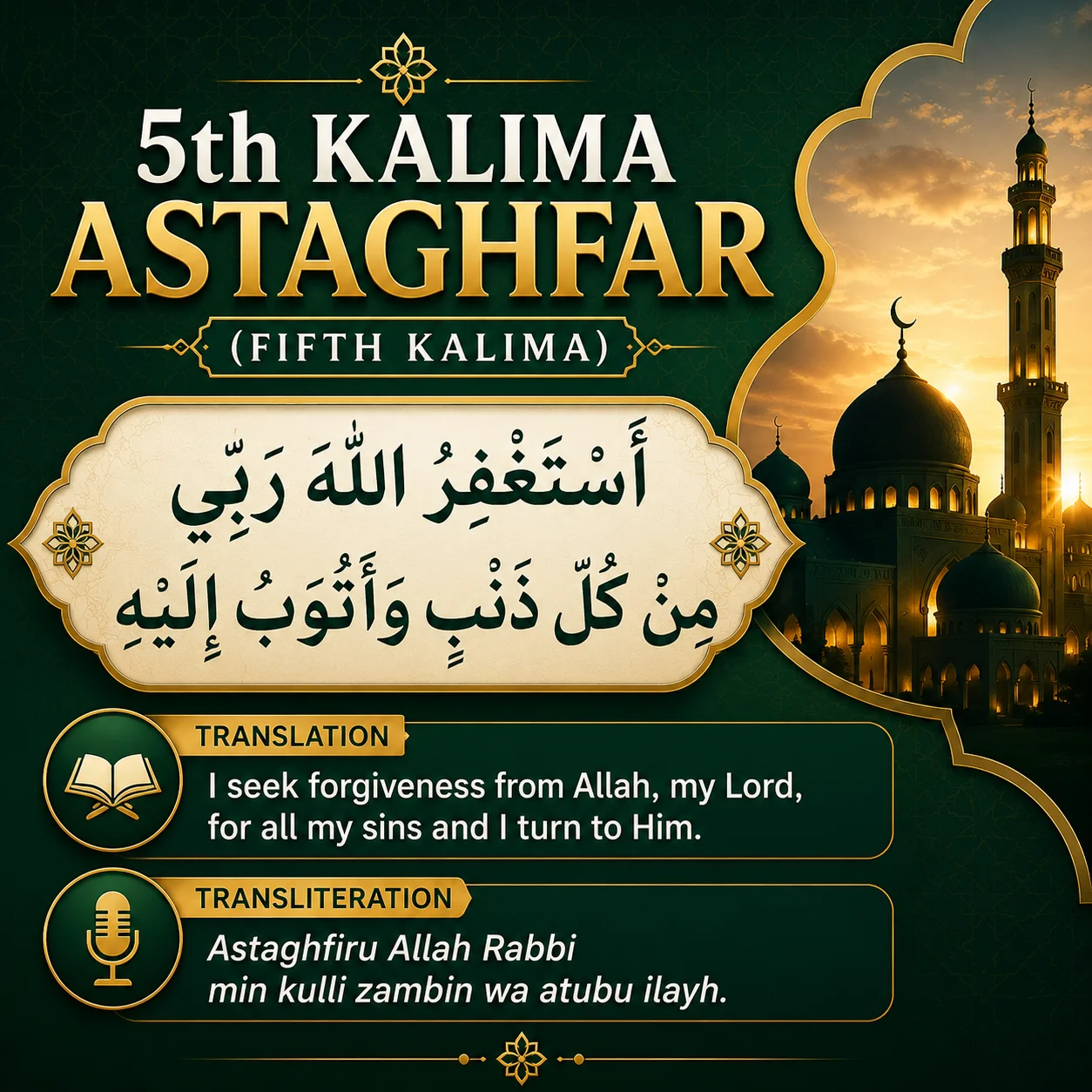
Kalima Astaghfar (Fifth Kalima) in Arabic with English translation, transliteration, tafseer, benefits & lessons.
Kalima Astaghfar (Fifth Kalima)
| Kalima Number | 5 |
| Name | Kalima Astaghfar (Repentance) |
| Meaning | Seeking Forgiveness from Allah |
| Origin | Derived from Quranic Duas & Hadith |
| Total Lines | 1 |
| Main Theme | Repentance, Forgiveness, Mercy & Returning to Allah |
5th Kalima Astaghfar (Arabic, Transliteration, Translation)
| أَسْتَغْفِرُ اللّٰهَ رَبِّي مِنْ كُلِّ ذَنْبٍ أَذْنَبْتُهُ عَمَدًا أَوْ خَطَأً سِرًّا أَوْ عَلَانِيَةً وَأَتُوبُ إِلَيْهِ مِنَ الذَّنْبِ الَّذِي أَعْلَمُ وَمِنَ الذَّنْبِ الَّذِي لَا أَعْلَمُ إِنَّكَ أَنْتَ عَلَّامُ الْغُيُوبِ وَسَتَّارُ الْعُيُوبِ وَغَفَّارُ الذُّنُوبِ وَلَا حَوْلَ وَلَا قُوَّةَ إِلَّا بِاللّٰهِ الْعَلِيِّ الْعَظِيمِ |
| Astaghfirullaaha rabbee min kulli zambin aznabtuhu ‘amadan aw khata’an sirran aw ‘alaaniyatan wa atoobu ilaihi minaz-zambil lazee a‘lamu wa minaz-zambil lazee laa a‘lamu innaka anta ‘allaamul ghuyoobi wa sattaarul ‘uyoobi wa ghaffaaruz-zunoobi wa laa hawla wa laa quwwata illaa billaahil ‘aliyyil ‘azeem |
| I seek forgiveness from Allah, my Lord, for every sin I committed knowingly or unknowingly, secretly or openly, and I turn to Him in repentance from the sin that I know and from the sin that I do not know. Surely You are the Knower of the unseen, the Concealer of faults, and the Forgiver of sins. There is no power and no strength except with Allah, the Most High, the Most Great. |
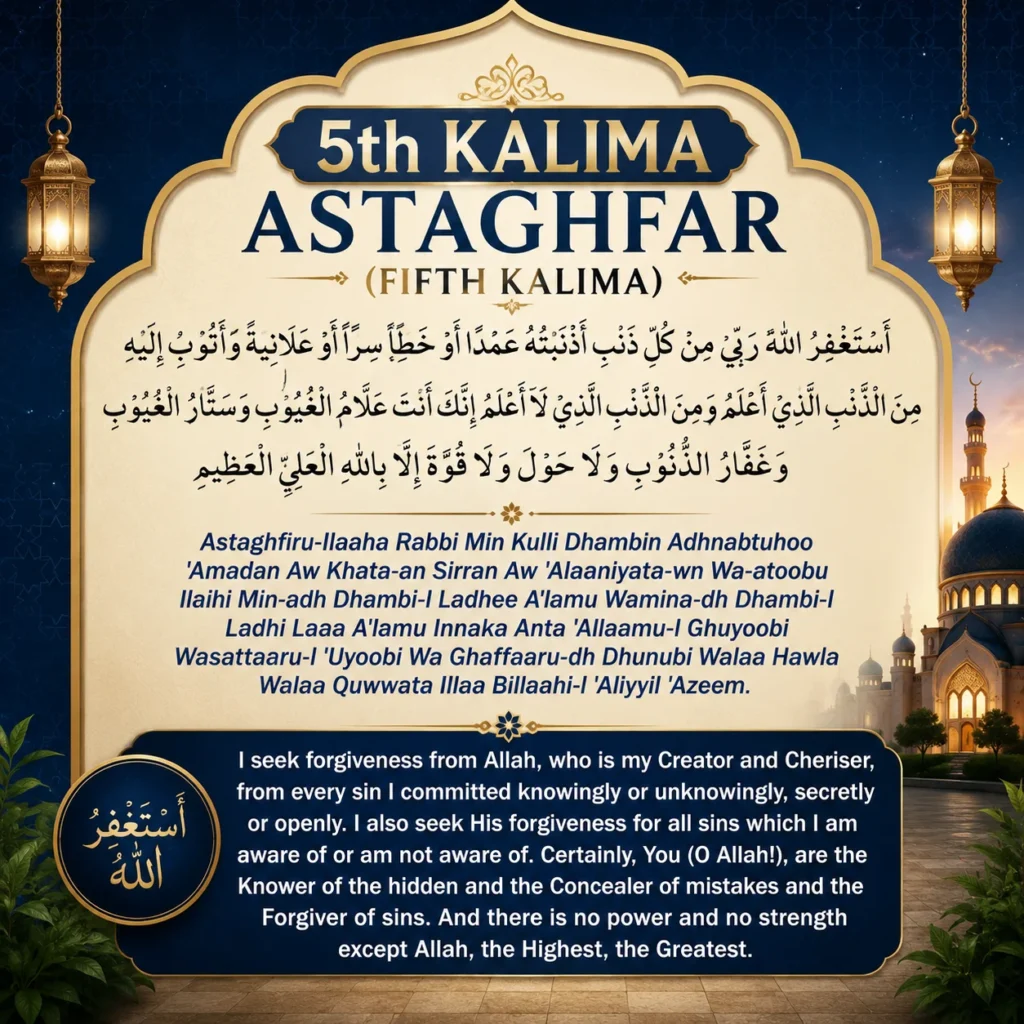
Full Kalima 5 English Transliteration
(5) Astaghfirullaaha rabbee min kulli zambin aznabtuhu ‘amadan aw khata’an sirran aw ‘alaaniyatan wa atoobu ilaihi minaz-zambil lazee a‘lamu wa minaz-zambil lazee laa a‘lamu innaka anta ‘allaamul ghuyoobi wa sattaarul ‘uyoobi wa ghaffaaruz-zunoobi wa laa hawla wa laa quwwata illaa billaahil ‘aliyyil ‘azeem
Full Kalima 5 English Translation
(5) I seek forgiveness from Allah, my Lord, for every sin I committed knowingly or unknowingly, secretly or openly, and I repent to Him from the sins I know and the sins I do not know. Surely You are the Knower of the unseen, the Concealer of faults, and the Forgiver of sins. There is no power nor strength except with Allah, the Most High, the Most Great.
Tafseer (Ibn Kathir – Detailed Explanation)
Kalima Astaghfar focuses on repentance, humility, and seeking Allah’s forgiveness. According to Tafseer Ibn Kathir, repentance (Tawbah) is among the greatest acts of worship because it demonstrates a servant’s recognition of their weakness and Allah’s infinite mercy.
The phrase “Astaghfirullaaha rabbee” means asking Allah sincerely for forgiveness. Ibn Kathir explains that true forgiveness requires regret for sins, stopping sinful actions, and intending not to return to them again.
This Kalima mentions sins committed intentionally and unintentionally, secretly and openly. This teaches believers that every sin matters and should be brought before Allah with sincerity and humility.
The words “Wa atoobu ilaih” indicate complete return to Allah. Tawbah is not merely speaking words; it means changing one’s heart, actions, and direction toward obedience.
“Allaamul ghuyoob” means Allah knows everything hidden and visible. Nothing escapes His knowledge. Despite this, Allah continues to conceal faults and give opportunities for repentance.
The names “Sattaarul ‘uyoob” and “Ghaffaaruz-zunoob” highlight Allah’s mercy. He hides the faults of His servants and repeatedly forgives sins for those who sincerely repent.
The ending phrase “Laa hawla wa laa quwwata illa billah” reminds believers that avoiding sin and doing good is only possible through Allah’s help and guidance.
Benefits & Lessons
1. Encourages Sincere Repentance
This Kalima teaches believers to admit mistakes and sincerely seek forgiveness from Allah without despair.
2. Increases Humility
Acknowledging sins removes arrogance and softens the heart before Allah.
3. Brings Allah’s Mercy
Allah loves those who repent sincerely and turn back to Him repeatedly.
4. Cleanses the Heart
Regular repentance purifies the soul from spiritual darkness caused by sins.
5. Removes Stress and Guilt
Seeking forgiveness brings emotional relief, peace, and hope in Allah’s mercy.
6. Strengthens Relationship with Allah
Turning to Allah in repentance creates closeness and dependence upon Him.
7. Encourages Self-Reflection
Believers become more aware of their actions and try to improve their character.
8. Protects from Repeating Sins
Frequent repentance reminds believers to avoid sinful habits and stay on the right path.
9. Increases Hope
No matter how many sins a person commits, Allah’s mercy remains greater.
10. Leads to Success in Hereafter
Sincere Tawbah is a means of salvation and protection from punishment.
FAQs
It is the fifth Kalima focused on repentance and seeking Allah’s forgiveness.
It means “I seek forgiveness from Allah.”
Because every human makes mistakes, and repentance brings Allah’s mercy.
Yes, Allah forgives all sins for those who sincerely repent.
Regret, stopping the sin, and intending not to repeat it again.
Yes, daily repentance is highly encouraged in Islam.
It means Allah is the Knower of all hidden things.
It means Allah conceals the faults of His servants.
Because humans may commit sins knowingly or unknowingly.
Repentance brings forgiveness, peace, mercy, and closeness to Allah.