
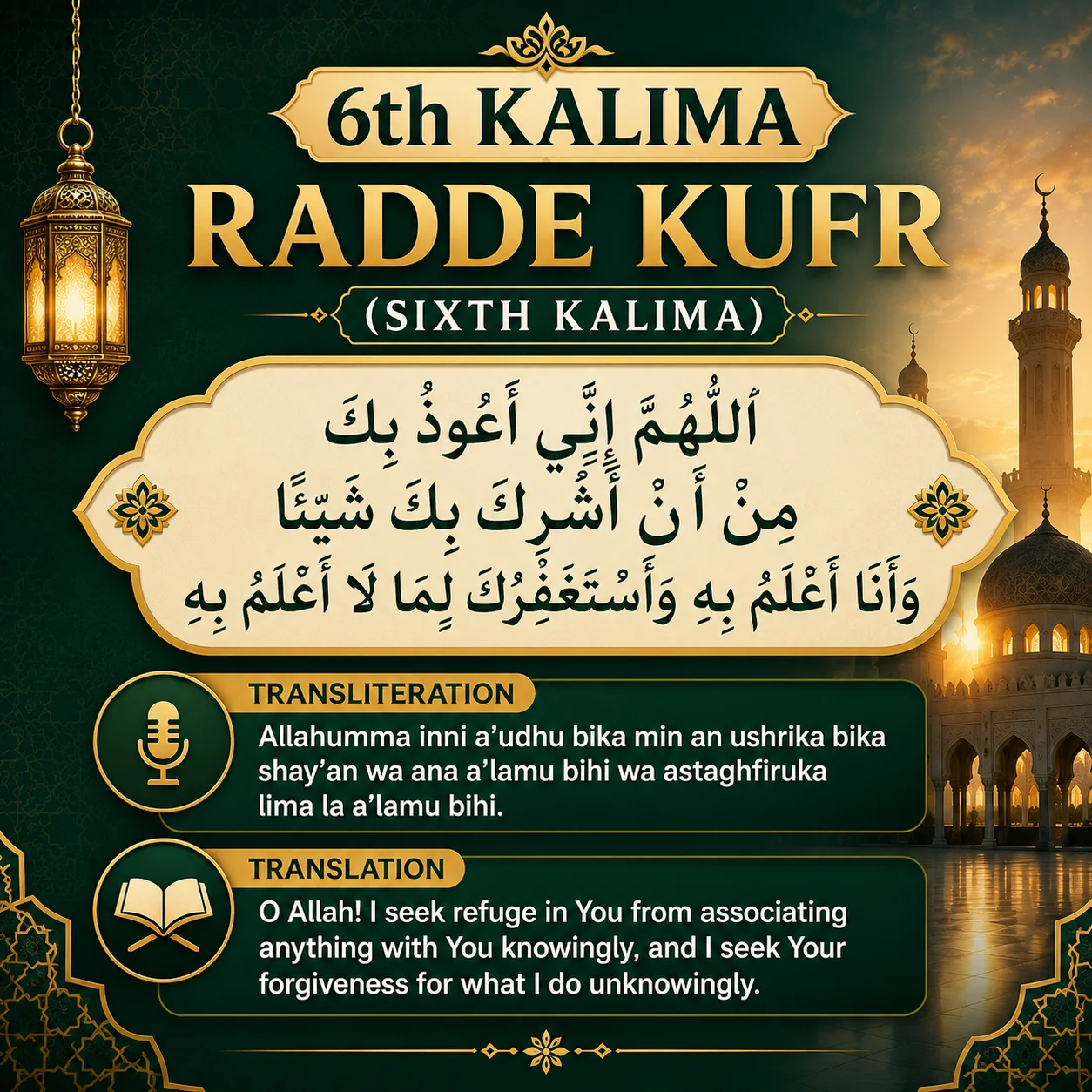
Kalima Radde Kufr (Sixth Kalima) in Arabic with English translation, transliteration, tafseer, benefits & lessons.
Kalima Radde Kufr (Sixth Kalima)
| Kalima Number | 6 |
| Name | Kalima Radde Kufr (Rejection of Disbelief) |
| Meaning | Seeking Protection from Disbelief and Shirk |
| Origin | Derived from Islamic supplications and teachings |
| Total Lines | 1 |
| Main Theme | Rejecting disbelief, shirk, and false beliefs while affirming pure Tawheed |
6th Kalima Radde Kufr (Arabic, Transliteration, Translation)
| اللّٰهُمَّ إِنِّي أَعُوذُ بِكَ مِنْ أَنْ أُشْرِكَ بِكَ شَيْئًا وَأَنَا أَعْلَمُ بِهِ وَأَسْتَغْفِرُكَ لِمَا لَا أَعْلَمُ بِهِ تُبْتُ عَنْهُ وَتَبَرَّأْتُ مِنَ الْكُفْرِ وَالشِّرْكِ وَالْكِذْبِ وَالْغِيبَةِ وَالْبِدْعَةِ وَالنَّمِيمَةِ وَالْفَوَاحِشِ وَالْبُهْتَانِ وَالْمَعَاصِي كُلِّهَا وَأَسْلَمْتُ وَأَقُولُ لَا إِلٰهَ إِلَّا اللّٰهُ مُحَمَّدٌ رَسُولُ اللّٰهِ |
| Allaahumma innee a‘oodhu bika min an ushrika bika shai’an wa ana a‘lamu bih, wa astaghfiruka limaa laa a‘lamu bih, tubtu ‘anhu wa tabarra’tu minal kufri wash-shirki wal kizbi wal gheebati wal bid‘ati wan-nameemati wal fawaahishi wal buhtaani wal ma‘aasi kullihaa wa aslamtu wa aqoolu laa ilaaha illal-laahu Muhammadur Rasoolullaah |
| O Allah! I seek refuge in You from associating anything with You knowingly, and I seek Your forgiveness for what I do unknowingly. I repent from it and reject disbelief, shirk, lying, backbiting, innovation, tale-bearing, indecencies, false accusations, and all sins. I submit to You and declare that there is no god but Allah and Muhammad is the Messenger of Allah. |
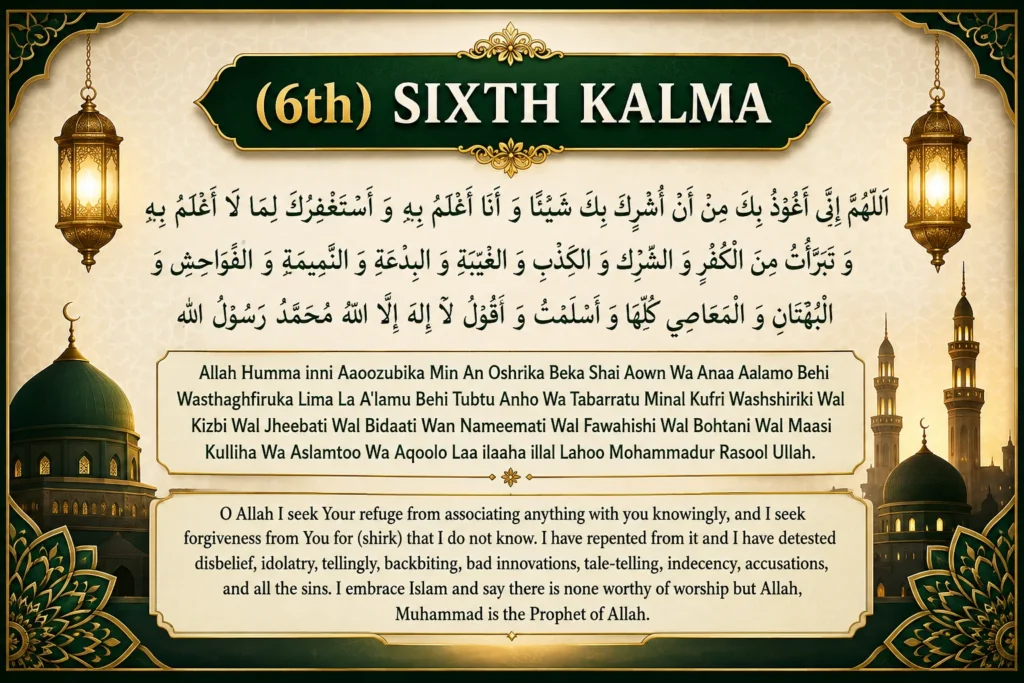
Full Kalima 6 English Transliteration
(6) Allaahumma innee a‘oodhu bika min an ushrika bika shai’an wa ana a‘lamu bih, wa astaghfiruka limaa laa a‘lamu bih, tubtu ‘anhu wa tabarra’tu minal kufri wash-shirki wal kizbi wal gheebati wal bid‘ati wan-nameemati wal fawaahishi wal buhtaani wal ma‘aasi kullihaa wa aslamtu wa aqoolu laa ilaaha illal-laahu Muhammadur Rasoolullaah
Full Kalima 6 English Translation
(6) O Allah! I seek refuge in You from associating anything with You knowingly, and I seek forgiveness for what I do unknowingly. I repent from it and reject disbelief, shirk, lying, backbiting, innovation, tale-bearing, indecencies, false accusations, and all sins. I submit to You and declare that there is no god but Allah and Muhammad is the Messenger of Allah.
Tafseer (Ibn Kathir – Detailed Explanation)
Kalima Radde Kufr is a powerful supplication focused on rejecting disbelief, shirk, hypocrisy, and sinful behavior while renewing faith in Allah. According to the teachings explained in Tafseer Ibn Kathir, the greatest danger to faith is shirk—associating partners with Allah knowingly or unknowingly.
The opening words “Allaahumma innee a‘oodhu bika” show complete dependence on Allah for protection. A believer recognizes that guidance and protection can only come from Allah.
The phrase “Min an ushrika bika shai’an wa ana a‘lamu bih” seeks refuge from knowingly committing shirk. Ibn Kathir explains that shirk is the gravest sin because it violates the foundation of Tawheed.
The words “Wa astaghfiruka limaa laa a‘lamu bih” teach humility by acknowledging that humans may unknowingly commit mistakes or hidden forms of shirk and sin. Therefore, believers constantly seek Allah’s forgiveness.
This Kalima also rejects major spiritual and social sins such as lying, backbiting, spreading gossip, indecency, false accusations, and innovations in religion. These actions harm individuals and society while weakening faith.
The ending declaration of Islam, “Laa ilaaha illal-laahu Muhammadur Rasoolullaah”, renews faith and confirms complete submission to Allah and His Messenger ﷺ.
Overall, this Kalima acts as a comprehensive renewal of faith, repentance, and commitment to righteous living.
Benefits & Lessons
1. Protects from Shirk
This Kalima teaches believers to seek Allah’s protection from all forms of shirk, both obvious and hidden.
2. Encourages Constant Repentance
Seeking forgiveness for known and unknown sins keeps the heart humble and spiritually aware.
3. Strengthens Tawheed
Rejecting disbelief and affirming Allah’s Oneness strengthens faith and sincerity in worship.
4. Improves Character
The Kalima warns against lying, gossip, backbiting, and false accusations, encouraging good manners.
5. Increases Self-Awareness
Believers become more careful about hidden sins and intentions.
6. Brings Spiritual Purification
Regular repentance cleanses the soul and strengthens the relationship with Allah.
7. Encourages Sincerity
This Kalima teaches honesty in faith, worship, and actions.
8. Promotes Social Harmony
Avoiding gossip, slander, and false accusations protects relationships and communities.
9. Renews Faith Daily
Reciting this Kalima regularly refreshes commitment to Islam and obedience to Allah.
10. Leads Toward Allah’s Mercy
Sincere repentance and rejection of sins attract Allah’s forgiveness and mercy.
FAQs
It is the sixth Kalima focused on rejecting disbelief, shirk, and sinful behavior.
It means rejecting disbelief and false beliefs.
Because shirk violates Tawheed, which is the foundation of Islam.
It refers to subtle forms of showing off or relying on others instead of Allah.
Because these sins damage both faith and society.
Yes, it is beneficial for renewing faith and seeking protection from sins.
It means seeking forgiveness for sins committed unknowingly.
Yes, it encourages honesty, sincerity, and avoiding harmful behavior.
The main lesson is sincere repentance and complete commitment to Tawheed.
To renew faith and reaffirm belief in Allah and His Messenger ﷺ.