
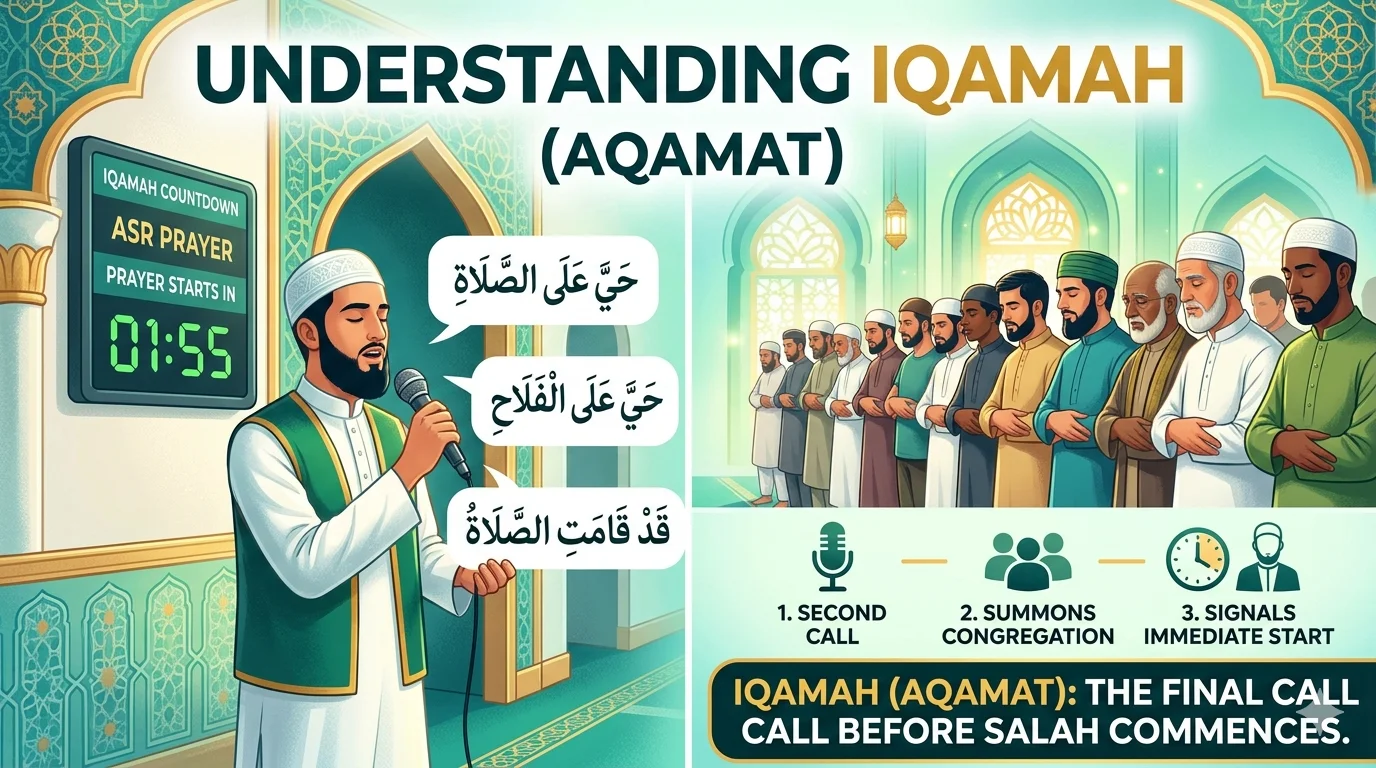
Iqamah (Aqamat) in Arabic with English translation, transliteration, tafseer, benefits & lessons according to Hanafi method.
Iqamah (Aqamat)
| Name | Iqamah (Aqamat) |
| Meaning | Second Call to Prayer |
| Fiqh Method | Hanafi |
| Language | Arabic |
| Main Theme | Preparing believers to begin Salah immediately |
| Purpose | Announcement that congregational prayer is about to start |
| Importance | An emphasized Sunnah before obligatory prayers |
Aqamat (Arabic, Transliteration, Translation)
| اللّٰهُ أَكْبَرُ اللّٰهُ أَكْبَرُ اللّٰهُ أَكْبَرُ اللّٰهُ أَكْبَرُ أَشْهَدُ أَنْ لَا إِلٰهَ إِلَّا اللّٰهُ أَشْهَدُ أَنْ لَا إِلٰهَ إِلَّا اللّٰهُ أَشْهَدُ أَنَّ مُحَمَّدًا رَسُولُ اللّٰهِ أَشْهَدُ أَنَّ مُحَمَّدًا رَسُولُ اللّٰهِ حَيَّ عَلَى الصَّلَاةِ حَيَّ عَلَى الصَّلَاةِ حَيَّ عَلَى الْفَلَاحِ حَيَّ عَلَى الْفَلَاحِ قَدْ قَامَتِ الصَّلَاةُ قَدْ قَامَتِ الصَّلَاةُ اللّٰهُ أَكْبَرُ اللّٰهُ أَكْبَرُ لَا إِلٰهَ إِلَّا اللّٰهُ |
| Allaahu Akbar Allaahu Akbar Allaahu Akbar Allaahu Akbar Ash-hadu an laa ilaaha illal-laah Ash-hadu an laa ilaaha illal-laah Ash-hadu anna Muhammadar Rasoolullaah Ash-hadu anna Muhammadar Rasoolullaah Hayya ‘alas-salaah Hayya ‘alas-salaah Hayya ‘alal-falaah Hayya ‘alal-falaah Qad qaamatis-salaah Qad qaamatis-salaah Allaahu Akbar Allaahu Akbar Laa ilaaha illal-laah |
| Allah is the Greatest, Allah is the Greatest. Allah is the Greatest, Allah is the Greatest. I bear witness that there is no god but Allah. I bear witness that there is no god but Allah. I bear witness that Muhammad is the Messenger of Allah. I bear witness that Muhammad is the Messenger of Allah. Come to prayer. Come to prayer. Come to success. Come to success. The prayer has begun. The prayer has begun. Allah is the Greatest, Allah is the Greatest. There is no god but Allah. |
Full Iqamah English Transliteration
(Iqamah) Allaahu Akbar Allaahu Akbar, Allaahu Akbar Allaahu Akbar, Ash-hadu an laa ilaaha illal-laah, Ash-hadu an laa ilaaha illal-laah, Ash-hadu anna Muhammadar Rasoolullaah, Ash-hadu anna Muhammadar Rasoolullaah, Hayya ‘alas-salaah, Hayya ‘alas-salaah, Hayya ‘alal-falaah, Hayya ‘alal-falaah, Qad qaamatis-salaah, Qad qaamatis-salaah, Allaahu Akbar Allaahu Akbar, Laa ilaaha illal-laah
Full Iqamah English Translation
(Iqamah) Allah is the Greatest, Allah is the Greatest. Allah is the Greatest, Allah is the Greatest. I bear witness that there is no god but Allah. I bear witness that there is no god but Allah. I bear witness that Muhammad is the Messenger of Allah. I bear witness that Muhammad is the Messenger of Allah. Come to prayer. Come to prayer. Come to success. Come to success. The prayer has begun. The prayer has begun. Allah is the Greatest, Allah is the Greatest. There is no god but Allah.
Iqamah (Aqamat) in Arabic with English translation, transliteration, tafseer, benefits & lessons.
Iqamah (Aqamat)
| Name | Iqamah (Aqamat) |
| Meaning | Second Call to Prayer |
| Language | Arabic |
| Main Theme | Preparing believers to begin Salah immediately |
| Purpose | Announcement that congregational prayer is about to start |
| Importance | An important Sunnah before obligatory prayers |
Aqamat (Arabic, Transliteration, Translation)
| اللّٰهُ أَكْبَرُ اللّٰهُ أَكْبَرُ أَشْهَدُ أَنْ لَا إِلٰهَ إِلَّا اللّٰهُ أَشْهَدُ أَنَّ مُحَمَّدًا رَسُولُ اللّٰهِ حَيَّ عَلَى الصَّلَاةِ حَيَّ عَلَى الْفَلَاحِ قَدْ قَامَتِ الصَّلَاةُ قَدْ قَامَتِ الصَّلَاةُ اللّٰهُ أَكْبَرُ اللّٰهُ أَكْبَرُ لَا إِلٰهَ إِلَّا اللّٰهُ |
| Allaahu Akbar Allaahu Akbar, Ash-hadu an laa ilaaha illal-laah, Ash-hadu anna Muhammadar Rasoolullaah, Hayya ‘alas-salaah, Hayya ‘alal-falaah, Qad qaamatis-salaatu qad qaamatis-salaah, Allaahu Akbar Allaahu Akbar, Laa ilaaha illal-laah |
| Allah is the Greatest, Allah is the Greatest. I bear witness that there is no god but Allah. I bear witness that Muhammad is the Messenger of Allah. Come to prayer. Come to success. The prayer has begun, the prayer has begun. Allah is the Greatest, Allah is the Greatest. There is no god but Allah. |
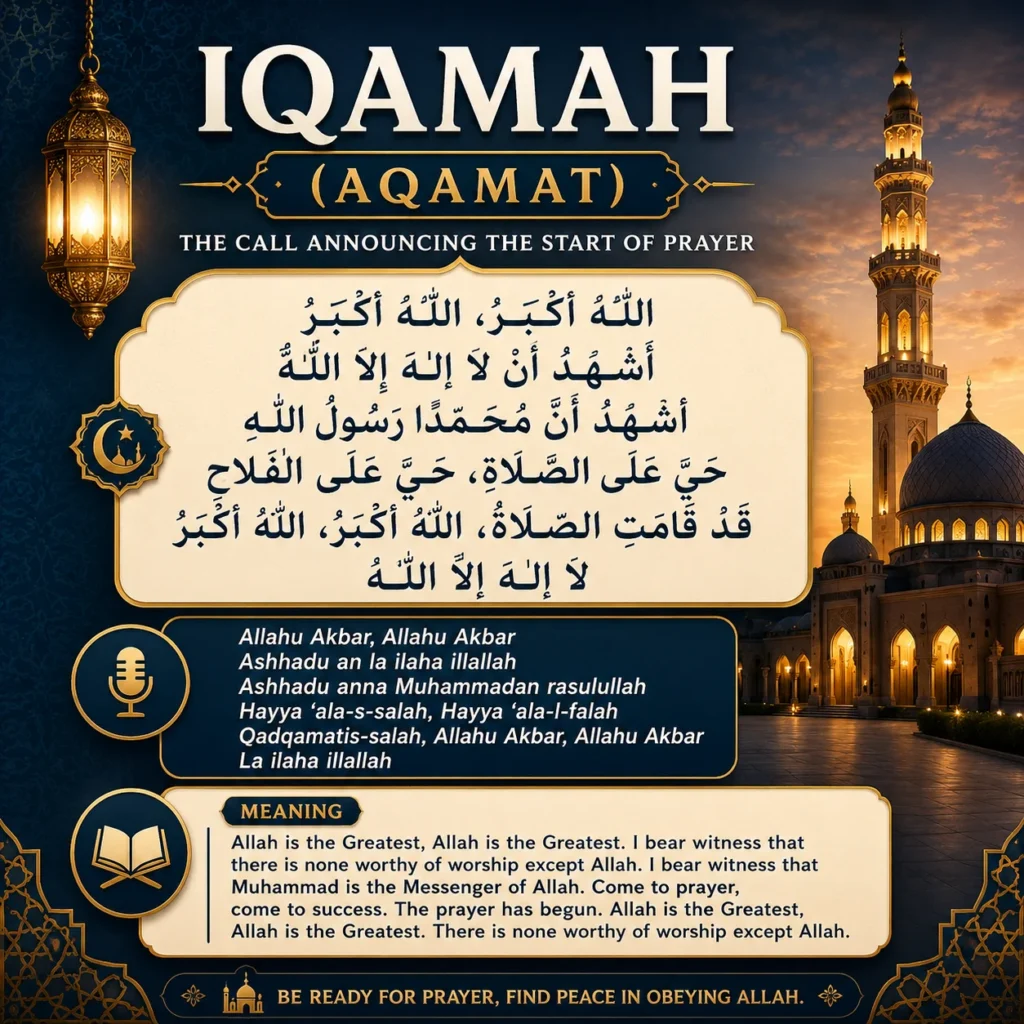
Full Iqamah English Transliteration
(Iqamah) Allaahu Akbar Allaahu Akbar, Ash-hadu an laa ilaaha illal-laah, Ash-hadu anna Muhammadar Rasoolullaah, Hayya ‘alas-salaah, Hayya ‘alal-falaah, Qad qaamatis-salaatu qad qaamatis-salaah, Allaahu Akbar Allaahu Akbar, Laa ilaaha illal-laah
Full Iqamah English Translation
(Iqamah) Allah is the Greatest, Allah is the Greatest. I bear witness that there is no god but Allah. I bear witness that Muhammad is the Messenger of Allah. Come to prayer. Come to success. The prayer has begun, the prayer has begun. Allah is the Greatest, Allah is the Greatest. There is no god but Allah.
Tafseer (Ibn Kathir – Detailed Explanation)
Iqamah is the second call to prayer given immediately before the congregational Salah begins. According to Islamic teachings and explanations found in Tafseer Ibn Kathir, the Iqamah serves as a final reminder for believers to stand before Allah in worship with focus, humility, and sincerity.
The opening phrase “Allaahu Akbar” reminds Muslims that Allah is greater than every worldly matter. It shifts attention away from distractions and toward worship.
The testimony “Ash-hadu an laa ilaaha illal-laah” confirms Allah’s Oneness, while “Ash-hadu anna Muhammadar Rasoolullaah” confirms belief in Prophet Muhammad ﷺ as the final Messenger.
The phrases “Hayya ‘alas-salaah” and “Hayya ‘alal-falaah” invite believers toward prayer and true success. Islam teaches that success is not limited to worldly achievement but includes success in the Hereafter through obedience to Allah.
The unique phrase in Iqamah, “Qad qaamatis-salaah”, means that the prayer has started and worshippers should stand in rows and prepare themselves spiritually and physically for Salah.
Iqamah strengthens discipline, unity, and punctuality among Muslims while creating a spiritual atmosphere before prayer begins.
Benefits & Lessons
1. Prepares Muslims for Salah
Iqamah acts as a final preparation before prayer begins and helps worshippers focus.
2. Strengthens Tawheed
The words of Iqamah remind believers about Allah’s greatness and Oneness.
3. Encourages Discipline
Muslims gather in organized rows immediately after hearing the Iqamah.
4. Promotes Unity
Iqamah brings believers together for congregational worship.
5. Increases Spiritual Focus
It prepares the heart and mind for sincere prayer.
6. Reminds About True Success
The phrase “Hayya ‘alal-falaah” teaches that success comes through worship and obedience.
7. Encourages Punctuality
Believers become regular and punctual in attending Salah.
8. Strengthens Islamic Identity
Iqamah is an important symbol of Islamic worship and community life.
9. Builds Respect for Prayer
It teaches Muslims to value Salah and prepare seriously for it.
10. Creates a Spiritual Environment
The words of Iqamah create peace, humility, and readiness for worship.
FAQs
Iqamah (Aqamat) is the second call to prayer announced before Salah begins.
Azaan announces prayer time while Iqamah (Aqamat) announces the immediate start of prayer.
It means “The prayer has begun.”
Yes, it is an important Sunnah before congregational obligatory prayers.
Usually the Mu’azzin or another person in the congregation gives it.
Because it serves as a brief immediate call to begin prayer.
Yes, Muslims may recite Iqamah before praying at home.
Its purpose is to prepare worshippers and start Salah in congregation.
Yes, it increases focus, discipline, and readiness for worship.
Yes, it has been practiced since the time of Prophet Muhammad ﷺ.