
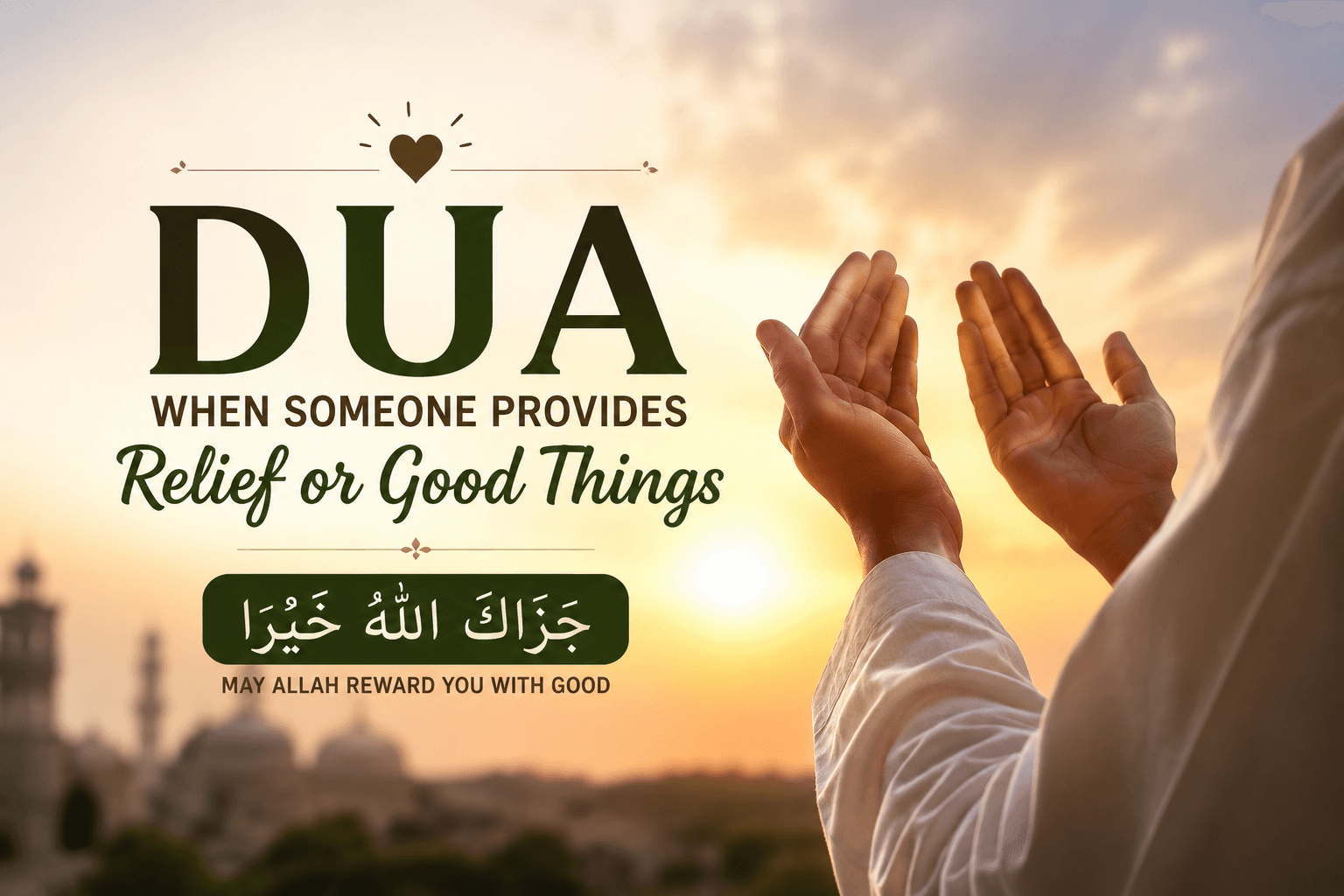
Dua when Someone Does You a Favor, Provides Relief, or Does Good to You
Estimated reading time: 10 minutes
Table of contents
Dua when Someone Does You a Favor, Provides Relief, or Does Good to You
Introduction
Gratitude is one of the noble qualities that Islam encourages every Muslim to develop. While believers are taught to thank Allah (SWT) for every blessing, they are also instructed to appreciate the people through whom Allah sends His favors. Whether someone helps you during a difficult time, offers sincere advice, gives you a gift, supports you financially, or performs any act of kindness, expressing gratitude is part of good Islamic character.
The dua when someone does you a favor, provides relief, or does good to you is a beautiful supplication taught by Prophet Muhammad ﷺ. Instead of simply saying words of thanks, this Sunnah dua asks Allah to reward the person with goodness. Since Allah is the Most Generous and the Best of Rewarders, praying for someone’s reward is considered one of the highest forms of appreciation.
This short yet meaningful dua strengthens relationships, spreads kindness, and reminds Muslims that every good deed deserves gratitude. It also encourages people to continue helping others because they know their efforts are appreciated and remembered in sincere prayers.
In this article, you will learn the authentic dua when someone does you a favor, provides relief, or does good to you in Arabic, its English transliteration, English translation, when to recite it, how to recite it correctly, and why this Sunnah is so important in Islam.
Information Table
| Particular | Details |
|---|---|
| Dua Name | Dua when Someone Does You a Favor, Provides Relief, or Does Good to You |
| Arabic | جَزَاكَ اللَّهُ خَيْرًا |
| English Transliteration | Jazākallāhu Khayran |
| English Translation | May Allah reward you with goodness. |
| Occasion | When someone helps you, does you a favor, gives you a gift, provides relief, or performs any act of kindness. |
| Hadith Source | Jami’ at-Tirmidhi, Hadith 2035 |
| Authenticity | Hasan (Good) |
| Virtue | It is one of the greatest ways to express gratitude by asking Allah to reward the person who helped you. |
Arabic + English Transliteration + English Translation
| Arabic | English Transliteration | English Translation |
|---|---|---|
| جَزَاكَ اللَّهُ خَيْرًا | Jazākallāhu Khayran | May Allah reward you with goodness. |
When to Recite?
The dua when someone does you a favor, provides relief, or does good to you should be recited whenever a person sincerely helps, supports, or benefits you in any way. It is not limited to major acts of kindness; even small gestures deserve appreciation and heartfelt supplication.
- When someone helps you solve a problem.
- After receiving a gift or thoughtful present.
- When someone offers financial assistance or charity.
- After receiving emotional support during difficult times.
- When someone provides food, hospitality, or accommodation.
- After receiving beneficial advice or guidance.
- When a friend, neighbor, colleague, or family member does something good for you.
- Whenever you wish to thank someone in the beautiful manner taught by the Prophet ﷺ.
Although saying “thank you” is good etiquette, reciting this Sunnah dua is even more meaningful because it asks Allah to reward the person with goodness in this world and the Hereafter.

How to Recite?
- Step 1: Recognize the Person’s Kindness
As soon as someone helps you or does something beneficial for you, acknowledge their kindness with a grateful heart. Islam teaches believers never to overlook the good deeds of others.
- Step 2: Recite the Sunnah Dua
Say Jazākallāhu Khayran (جَزَاكَ اللَّهُ خَيْرًا), sincerely asking Allah to reward the person with the best of rewards. If addressing a woman, you may say Jazākillāhu Khayran, and if addressing multiple people, use the appropriate plural form.
- Step 3: Express Gratitude with Good Manners
Along with the dua, thank the person politely, smile, and show sincere appreciation through your words and actions. Good manners are an essential part of Islamic etiquette.
- Step 4: Repay the Kindness if Possible
If you are able, return the favor with another act of kindness. If you cannot, continue making dua for the person, knowing that Allah’s reward is far greater than anything you can offer.
- Step 5: Make It a Daily Habit
Practice this Sunnah every time someone helps you. Making this dua a regular habit spreads gratitude, strengthens relationships, and reminds you that every blessing ultimately comes from Allah.
By consistently reciting the dua when someone does you a favor, provides relief, or does good to you, you revive a beautiful Sunnah of the Prophet ﷺ, encourage kindness among people, and ask Allah the Best of Rewarders to bless those who have shown you goodness.
Importance in Islam
Gratitude (shukr) is one of the most beloved qualities in Islam. A Muslim is taught to be thankful to Allah (SWT) for every blessing while also appreciating the people through whom Allah sends His favors. The dua when someone does you a favor, provides relief, or does good to you beautifully combines both of these teachings. Instead of limiting gratitude to worldly words, this supplication asks Allah to reward the person with goodness, acknowledging that the greatest reward comes from Him alone.
Reciting this dua also reflects humility. It reminds us that we may not always be able to repay every act of kindness, but Allah’s reward is limitless. By sincerely asking Allah to bless the one who helped us, we fulfill an important aspect of Islamic etiquette and strengthen the bonds of love and respect within the Muslim community.
The Prophet Muhammad ﷺ encouraged Muslims to appreciate others and warned against being ungrateful. Thanking people for their kindness is considered part of thanking Allah because every favor ultimately comes from Him.
“Whoever does not thank people has not thanked Allah.”
Sunan Abi Dawud, Hadith 4811; also recorded by Jami’ at-Tirmidhi (1954) — Authentic (Sahih)
This hadith highlights the importance of expressing gratitude to those who help us. Therefore, making the dua when someone does you a favor, provides relief, or does good to you is not merely a social courtesy it is an act of worship that follows the Sunnah of the Prophet ﷺ and earns the pleasure of Allah.
Hadith About the Dua
The Prophet Muhammad ﷺ taught that one of the greatest ways to thank a person is to ask Allah to reward them with goodness.
عَنْ أُسَامَةَ بْنِ زَيْدٍ رَضِيَ اللَّهُ عَنْهُمَا قَالَ قَالَ رَسُولُ اللَّهِ ﷺ:
مَنْ صُنِعَ إِلَيْهِ مَعْرُوفٌ فَقَالَ لِفَاعِلِهِ: جَزَاكَ اللَّهُ خَيْرًا، فَقَدْ أَبْلَغَ فِي الثَّنَاءِ.
English Translation:
“Whoever has a favor done for him and says to the one who did it, ‘Jazākallāhu Khayran’ (May Allah reward you with goodness), has indeed conveyed the utmost in praise.”
Jami’ at-Tirmidhi, Hadith 2035 — Imam at-Tirmidhi graded it Hasan (Good).
This authentic hadith demonstrates that asking Allah to reward someone is among the highest forms of appreciation. Even if you are unable to repay a person’s kindness, sincerely saying Jazākallāhu Khayran entrusts their reward to Allah, whose generosity is beyond measure.
Rewards of Reciting
Making the dua when someone does you a favor, provides relief, or does good to you is a simple act of worship that carries many spiritual and social benefits. It reflects gratitude, strengthens relationships, and revives a beautiful Sunnah of the Prophet ﷺ.
- Follows the Sunnah: Reciting this dua revives an authentic practice taught by Prophet Muhammad ﷺ.
- Expresses True Gratitude: It goes beyond ordinary words of thanks by asking Allah to reward the person abundantly.
- Earns the Pleasure of Allah: Showing gratitude to people is part of showing gratitude to Allah.
- Strengthens Relationships: This supplication nurtures love, trust, and mutual respect among family, friends, neighbors, and the wider Muslim community.
- Encourages Kindness: People are inspired to continue helping others when they receive sincere appreciation and heartfelt prayers.
- Invokes Allah’s Reward: Instead of offering a limited worldly reward, you ask Allah to grant everlasting goodness to the person who helped you.
- Develops Good Character: Regularly reciting this dua cultivates humility, thankfulness, and excellent Islamic manners.
Common Mistakes
Although this Sunnah is easy to practice, some common mistakes may reduce its impact or cause Muslims to overlook its importance. Avoiding these mistakes helps preserve the true spirit of gratitude taught in Islam.
- Forgetting to Recite the Sunnah Dua: Many people only say “thank you” and forget to say Jazākallāhu Khayran, which is the supplication taught by the Prophet ﷺ.
- Reciting Without Sincerity: The dua should come from the heart, genuinely asking Allah to reward the person for their kindness.
- Mispronouncing the Words: Learn the correct pronunciation so the supplication is recited as taught in the Sunnah.
- Thinking It Applies Only to Major Favors: This dua may be recited for both small and great acts of kindness.
- Neglecting Good Manners: Along with making the dua, maintain a kind attitude, smile, and speak politely.
- Believing Material Repayment Is Always Necessary: If you cannot repay the favor, sincerely asking Allah to reward the person is itself a great form of appreciation.
- Not Teaching Children This Sunnah: Encourage children to learn and practice this dua so gratitude becomes part of their Islamic character from a young age.
By avoiding these common mistakes and regularly reciting the dua when someone does you a favor, provides relief, or does good to you, Muslims can revive an authentic Sunnah, express sincere gratitude, and strengthen the bonds of kindness and compassion within the community.
Key Takeaways
- The authentic dua when someone does you a favor, provides relief, or does good to you is جَزَاكَ اللَّهُ خَيْرًا (Jazākallāhu Khayran).
- Its meaning is “May Allah reward you with goodness.”
- This dua is based on an authentic hadith narrated by Usamah ibn Zayd (RA) and recorded in Jami’ at-Tirmidhi (2035).
- It is recommended whenever someone helps you, gives you a gift, supports you, or performs any act of kindness.
- Reciting this supplication is one of the highest forms of gratitude because it asks Allah to reward the person.
- The dua strengthens brotherhood, encourages kindness, and promotes excellent Islamic manners.
- Muslims should strive to make this Sunnah a regular part of their daily interactions.
Conclusion
The dua when someone does you a favor, provides relief, or does good to you is one of the most beautiful examples of Islamic gratitude. Instead of limiting our appreciation to worldly words, the Prophet Muhammad ﷺ taught us to ask Allah the Most Generous and the Best of Rewarders to reward those who show us kindness.
By sincerely saying Jazākallāhu Khayran, we acknowledge that every blessing ultimately comes from Allah while praying that the person who helped us receives abundant goodness in this life and the Hereafter. This simple Sunnah strengthens relationships, spreads love and compassion, and encourages believers to continue helping one another for the sake of Allah.
Make it a habit to recite this beautiful supplication whenever someone does you a favor, provides relief, or performs any act of kindness. It takes only a few moments to say, yet its rewards and impact are far greater than we can imagine.
Frequently Asked Questions (FAQs)
The authentic Sunnah supplication is جَزَاكَ اللَّهُ خَيْرًا (Jazākallāhu Khayran), which means “May Allah reward you with goodness.”
You should recite this dua whenever someone helps you, gives you a gift, offers support, provides relief during hardship, or performs any act of kindness.
Yes. It is based on an authentic hadith narrated by Usamah ibn Zayd (RA) and recorded in Jami’ at-Tirmidhi (2035), where Imam at-Tirmidhi graded it Hasan (Good).
Yes. Expressing thanks with kind words is encouraged, and combining it with Jazākallāhu Khayran follows the Sunnah and asks Allah to reward the person with goodness.
This dua expresses sincere gratitude, revives an authentic Sunnah, strengthens relationships, encourages kindness, and asks Allah to grant the helper the best reward in this world and the Hereafter.
- Dua Before Leaving the Mosque (Masjid) in Arabic with English translation, transliteration, tafseer, benefits & lessons.
- Dua for Not Getting Sleep in Arabic with English translation, transliteration, meaning, benefits, and authentic Sunnah guidance.
- Dua Before Sleeping in Arabic with English translation, transliteration, meaning, benefits, Hadith and FAQs.
- Dua for Islamic New Year in Arabic with English translation, transliteration, meaning, importance, authenticity, benefits and FAQs.
- Dua for Insomnia in Arabic with English translation, transliteration, meaning, benefits, and authentic Hadith.