

Dua for Insomnia in Arabic with English translation, transliteration, meaning, benefits, and authentic Hadith.
Dua for Insomnia
| Name | Dua for Insomnia |
| Meaning | Supplication for Relief from Sleeplessness |
| Source | Authentic Hadith |
| Total Lines | 1 |
| Main Theme | Seeking Allah’s Protection, Peace, and Restful Sleep |
| Recited When | When Unable to Sleep or Suffering from Insomnia |
The Dua for Insomnia (Arabic, Transliteration, Translation)
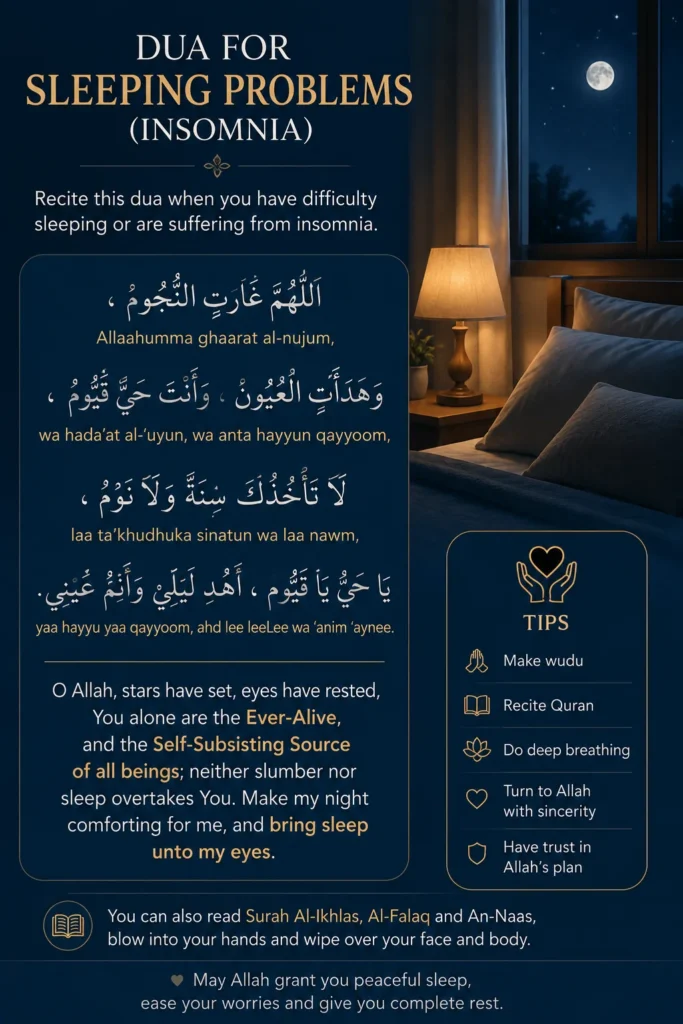
| اللَّهُمَّ غَارَتِ النُّجُومُ، وَهَدَأَتِ الْعُيُونُ، وَأَنْتَ حَيٌّ قَيُّومٌ لَا تَأْخُذُكَ سِنَةٌ وَلَا نَوْمٌ، يَا حَيُّ يَا قَيُّومُ، أَهْدِئْ لَيْلِي وَأَنِمْ عَيْنِي |
| Allahumma ghaaratin nujoomu wa hada’atil ‘uyoonu wa Anta Hayyun Qayyoomun laa ta’khuzuka sinatun wa laa nawm. Yaa Hayyu Yaa Qayyoom, ahdi’ laylee wa anim ‘aynee. |
| O Allah, the stars have disappeared, the eyes have become calm, and You are the Ever-Living, the Sustainer. Neither drowsiness nor sleep overtakes You. O Ever-Living, O Sustainer, calm my night and grant sleep to my eyes. |
When to Recite Dua for Insomnia?
The Dua for Insomnia should be recited whenever a person struggles to fall asleep or wakes up during the night and finds it difficult to return to sleep. It is a Sunnah practice to turn to Allah during moments of anxiety, restlessness, or sleeplessness, seeking His mercy and protection.
Whether sleeplessness is caused by stress, worry, fear, or an unknown reason, this beautiful supplication reminds believers that true peace and comfort come only from Allah. Reciting it with sincerity before trying to sleep helps calm the heart and strengthen trust in Allah’s care.
Importance of Dua for Insomnia in Islam
Islam teaches Muslims to remember Allah in every situation, including times of illness, anxiety, and sleeplessness. The Dua for Insomnia is a reminder that Allah is the Ever-Living (Al-Hayy) and the Sustainer (Al-Qayyoom), Who never sleeps and is always aware of His servants’ conditions.
By reciting this supplication, believers place their worries before Allah and ask Him to replace anxiety with tranquility. It encourages reliance upon Allah instead of depending solely on worldly solutions and strengthens faith that every difficulty has relief through His mercy.
Making this dua a regular habit before sleeping also helps develop a peaceful bedtime routine filled with remembrance (dhikr), bringing spiritual comfort and inner peace.
Authentic Hadith About Dua for Insomnia
The Prophet Muhammad ﷺ taught various supplications for those experiencing difficulty sleeping. Among them is the dua asking Allah, the Ever-Living and Sustainer, to calm the night and grant peaceful sleep. These supplications demonstrate that Islam provides spiritual guidance for every aspect of life, including physical and emotional well-being.
Scholars explain that remembering Allah before sleep brings comfort to the heart, removes fear and anxiety, and increases reliance upon Him. Muslims are encouraged to combine these authentic supplications with other Sunnah bedtime practices such as reciting Ayat al-Kursi, the last two verses of Surah Al-Baqarah, and the three Quls.
Rewards of Reciting Dua for Insomnia
- Strengthens reliance (tawakkul) upon Allah during difficult nights.
- Brings peace and comfort to the heart through remembrance of Allah.
- Follows the Sunnah of Prophet Muhammad ﷺ.
- Increases remembrance (dhikr) before sleeping.
- Helps reduce fear, anxiety, and restlessness.
- Strengthens faith in Allah’s protection and mercy.
- Encourages patience during times of hardship.
- Turns a sleepless night into an act of worship.
- Promotes a peaceful Islamic bedtime routine.
- Reminds believers that true tranquility comes only from Allah.
Common Mistakes Related to Dua for Insomnia
- Reciting the dua without understanding its meaning.
- Thinking the dua should only be recited during severe insomnia.
- Depending only on worldly remedies while neglecting supplication.
- Reciting the dua hurriedly without sincerity or reflection.
- Forgetting other Sunnah bedtime practices such as Ayat al-Kursi and the three Quls.
- Losing hope if sleep does not come immediately after making the dua.
Key Takeaways
- Dua for Insomnia is an authentic Islamic supplication.
- It is recited when a person is unable to sleep.
- The dua asks Allah for peace, comfort, and restful sleep.
- It reminds believers that Allah never sleeps and always protects His servants.
- Regular recitation strengthens reliance upon Allah.
- Following Sunnah bedtime adhkar increases spiritual peace.
- The dua helps replace anxiety with trust in Allah.
- Teaching this dua to children encourages Islamic bedtime habits.
Conclusion
Dua for Insomnia is a beautiful Sunnah supplication that reminds Muslims to seek comfort, peace, and protection from Allah during sleepless nights. By remembering Allah before sleep and placing complete trust in Him, believers strengthen their faith and find tranquility even during difficult moments. Making this dua a regular part of your bedtime routine brings spiritual comfort, encourages remembrance of Allah, and helps transform restless nights into moments of worship.
FAQs
Dua for Insomnia is a Sunnah supplication recited to seek Allah’s help, peace, and restful sleep when suffering from sleeplessness.
Dua for Insomnia should be recited whenever you are unable to sleep or wake up during the night and cannot fall asleep again.
Yes, Dua for Insomnia is based on authentic prophetic supplications taught by Prophet Muhammad ﷺ for those experiencing sleeplessness.
Yes, Dua for Insomnia may be recited every night, especially whenever a person feels anxious, restless, or unable to sleep.
Dua for Insomnia teaches reliance upon Allah, patience, remembrance, and seeking comfort from Him alone.
- Dua Before Sleeping in Arabic with English translation, transliteration, meaning, benefits, Hadith and FAQs.
- Dua for Islamic New Year in Arabic with English translation, transliteration, meaning, importance, authenticity, benefits and FAQs.
- Dua for Breaking Fast in Arabic with English translation, transliteration, benefits, lessons, hadith, and FAQs.
- Dua When Something Happens You Like in Arabic with English translation, transliteration, meaning, benefits and FAQs.
- Dua when you see someone Happy and Smiling in Arabic with English translation, transliteration, Hadith context, importance, rewards, and lessons.