
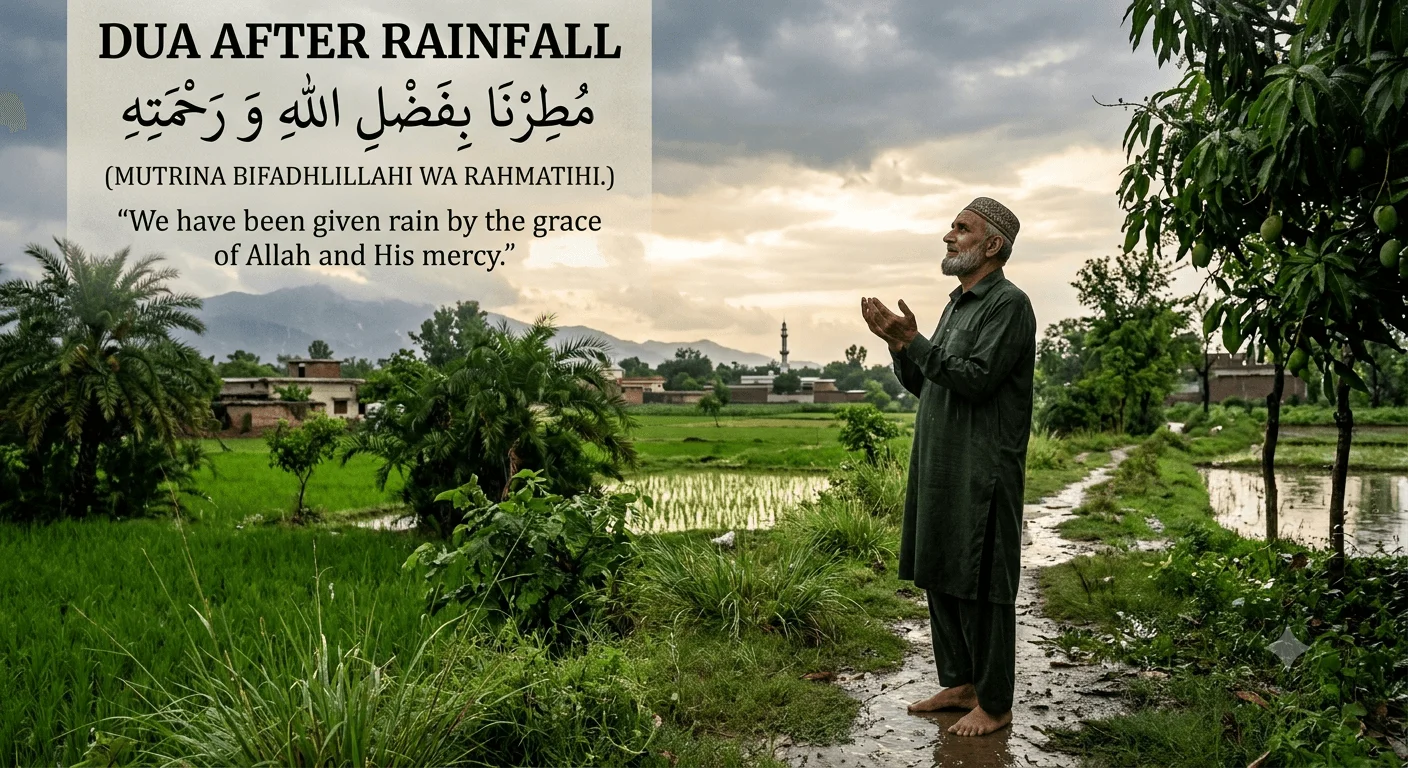
Dua After Rainfall in Arabic with English Translation, Transliteration, Meaning, Benefits & Hadith
Estimated reading time: 5 minutes
Table of contents
Dua After Rainfall
The Dua After Rainfall is a beautiful Sunnah supplication recited after rain has fallen. Rain is one of Allah’s greatest blessings and a sign of His mercy upon the earth. The Prophet Muhammad ﷺ taught Muslims to praise Allah after rainfall by acknowledging that the rain came only through His grace and mercy. This short yet meaningful dua reminds believers that every blessing comes from Allah alone and encourages gratitude for His countless favors.
| Name | Dua After Rainfall |
|---|---|
| Meaning | Supplication After Rain Ends |
| Source | Sahih al-Bukhari |
| Total Lines | 1 |
| Main Theme | Gratitude for Allah’s Mercy and Rain |
| Recited When | After Rainfall |
The Dua After Rainfall (Arabic, Transliteration & Translation)
| Arabic | مُطِرْنَا بِفَضْلِ اللَّهِ وَرَحْمَتِهِ |
|---|---|
| Transliteration | Mutirnaa bifadlillahi wa rahmatihi. |
| English Translation | We have been given rain by the grace of Allah and His mercy. |
When to Recite Dua After Rainfall?
The Dua After Rainfall should be recited after rain has fallen, while reflecting upon Allah’s mercy and blessings. Rain is one of the greatest favors that Allah sends upon His creation, bringing life to the earth, crops, animals, and people.
Muslims should remember Allah after rainfall and thank Him sincerely, recognizing that every drop of rain comes only by His grace and mercy.
Importance of Dua After Rainfall in Islam
Islam teaches believers to remember Allah during every blessing. Rain is repeatedly described in the Qur’an as a mercy from Allah because it revives the earth and provides sustenance for all living creatures.
The Supplication After Rainfall teaches Muslims to attribute blessings to Allah rather than natural causes alone. By praising Allah after rainfall, believers strengthen their faith, gratitude, and reliance upon Him.
Hadith About Supplication After Rainfall
The Prophet Muhammad ﷺ taught his companions to say:
مُطِرْنَا بِفَضْلِ اللَّهِ وَرَحْمَتِهِ
Sahih al-Bukhari
This supplication reminds Muslims that rainfall comes only through Allah’s grace and mercy and encourages gratitude instead of attributing blessings to anything else.
Rewards of Reciting Dua After Rainfall
- Expresses gratitude to Allah for sending beneficial rain.
- Follows the Sunnah of Prophet Muhammad ﷺ.
- Strengthens faith by acknowledging Allah as the Provider.
- Reminds believers that every blessing comes from Allah.
- Brings barakah (blessings) through gratitude.
- Encourages remembrance of Allah after His favors.
- Develops humility and appreciation for Allah’s mercy.
- Increases awareness of Allah’s countless blessings.
- Transforms a natural event into an act of worship.
- Earns spiritual reward by following authentic Sunnah.
How to Recite Dua After Rainfall
- Wait Until the Rain Has Fallen
Recite the Supplication After Rainfall after the rainfall has occurred, thanking Allah for His mercy and provision.
- Praise Allah with Gratitude
Remember that rain is one of Allah’s greatest blessings and praise Him sincerely for sending beneficial rain.
- Recite the Sunnah Dua
Say: مُطِرْنَا بِفَضْلِ اللَّهِ وَرَحْمَتِهِ with presence of heart and gratitude.
- Reflect on Its Meaning
Understand that every drop of rain comes only through Allah’s grace and mercy, not by anyone else’s power.
- Continue Making Personal Duas
After reciting the Sunnah supplication, ask Allah for forgiveness, blessings, good health, lawful sustenance, and success in this life and the Hereafter.
- Teach Your Family
Encourage children and family members to memorize the Supplication After Rainfall so they develop the habit of thanking Allah after every rainfall.
Common Mistakes Related to Dua After Rainfall
- Forgetting to thank Allah after rainfall.
- Attributing rain only to natural causes while forgetting Allah’s mercy.
- Reciting the dua without understanding its meaning.
- Ignoring the Sunnah after receiving Allah’s blessings.
- Teaching the words without explaining their importance.
- Missing the opportunity to remember Allah after rainfall.
Key Takeaways
- Dua After Rainfall is an authentic Sunnah supplication.
- It thanks Allah for sending rain through His grace and mercy.
- The dua should be recited after rainfall.
- Rain is one of Allah’s greatest blessings upon creation.
- The supplication strengthens gratitude and faith.
- Following this Sunnah earns spiritual rewards.
- Children should be encouraged to learn this beautiful dua.
- Every blessing should bring us closer to Allah.
Conclusion
Dua After Rainfall is a beautiful Sunnah that teaches Muslims to thank Allah for His mercy and blessings. Every rainfall is a reminder of Allah’s power, kindness, and provision for His creation. By regularly reciting this supplication, believers strengthen their gratitude, increase their remembrance of Allah, and follow the noble example of Prophet Muhammad ﷺ. Making this dua a daily habit whenever rain falls brings barakah and deepens a believer’s appreciation for Allah’s countless favors.
FAQs
The Dua After Rainfall is the Sunnah supplication recited after rain, thanking Allah for His grace and mercy.
The Dua After Rainfall should be recited immediately after rainfall as an expression of gratitude to Allah.
Yes, the Dua After Rainfall is authentically reported in Sahih al-Bukhari.
The Dua After Rainfall reminds Muslims that rain is sent only by Allah’s grace and mercy and teaches gratitude for His blessings.
Yes. The Dua After Rainfall is short, easy to memorize, and helps children develop the habit of thanking Allah after rainfall.
- Dua for Rain
- Dua to Make When It’s Raining
- Dua When Seeing Rain Clouds
- Dua When Something Happens You Like in Arabic with English translation, transliteration, meaning, benefits and FAQs
- Dua for Not Getting Sleep in Arabic with English translation, transliteration, meaning, benefits, and authentic Sunnah guidance.