
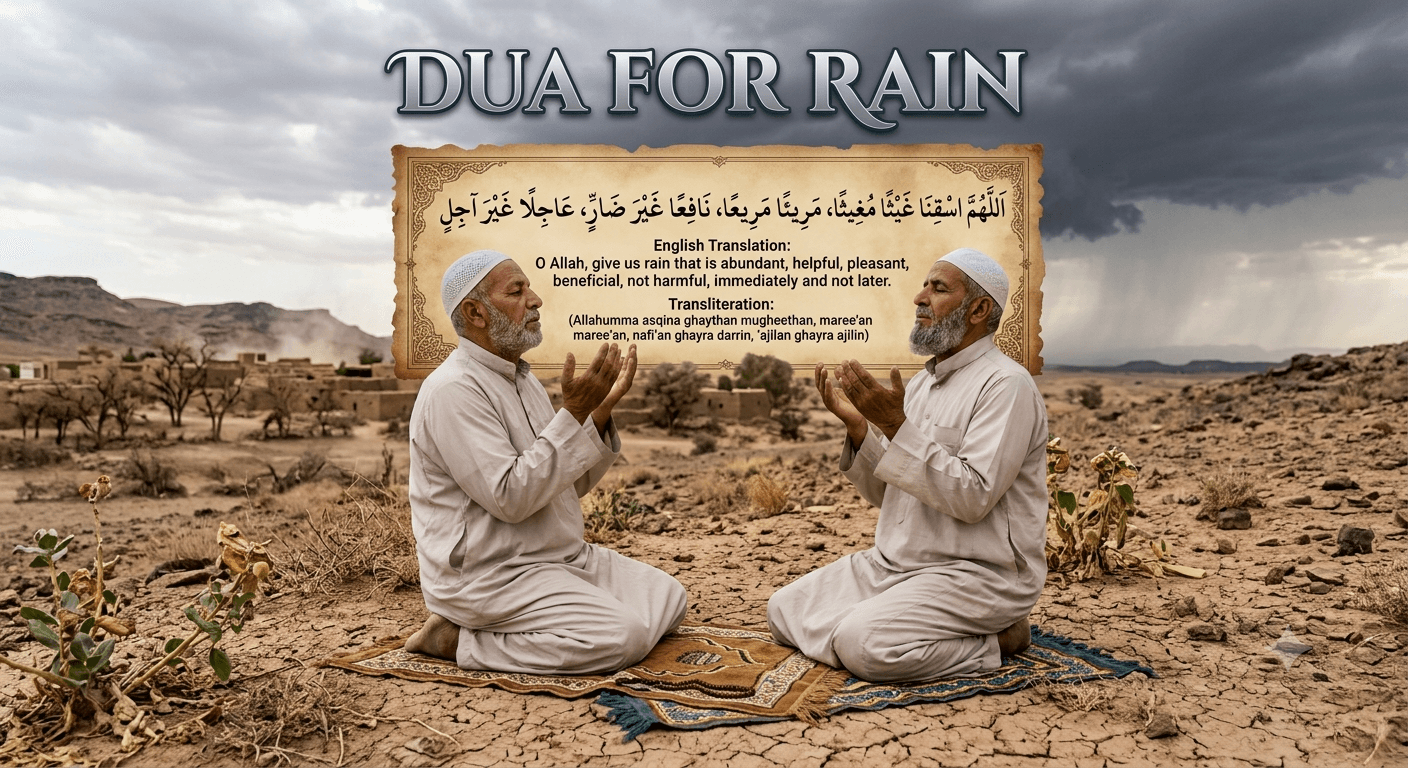
Dua for Rain in Arabic with English translation, transliteration, meaning, benefits, hadith, and FAQs.
Estimated reading time: 5 minutes
Table of contents
Dua for Rain
| Name | Dua for Rain |
| Meaning | Supplication for Beneficial Rain |
| Source | Sunan Abu Dawood & Authentic Hadith |
| Total Lines | 1 |
| Main Theme | Seeking Beneficial Rain from Allah |
| Recited When | During Drought or When Asking Allah for Rain |
The Dua for Rain (Arabic, Transliteration & Translation)
| Arabic | اللَّهُمَّ اسْقِنَا غَيْثًا مُغِيثًا مَرِيئًا مَرِيعًا نَافِعًا غَيْرَ ضَارٍّ، عَاجِلًا غَيْرَ آجِلٍ |
| English Transliteration | Allahummasqinaa ghaythan mugheethan, maree’an maree’an, naafi’an ghayra daarrin, ‘aajilan ghayra aajil. |
| English Translation | O Allah, send us abundant, beneficial, pleasant, and nourishing rain that is not harmful, and send it soon without delay. |
When to Recite Dua for Rain?
Dua for Rain is recited whenever there is a need for rainfall, especially during drought, dry seasons, or when crops, animals, and people suffer from a lack of water. Muslims ask Allah alone to send beneficial rain because He is the Provider and Controller of all weather.
The Prophet Muhammad ﷺ would also make special supplications for rain (Salat al-Istisqa) during times of drought. Muslims may recite this dua individually or collectively while sincerely asking Allah for His mercy.
Importance of Dua for Rain in Islam
Rain is one of Allah’s greatest blessings and a source of life for humans, animals, and plants. The Quran repeatedly reminds believers that Allah sends rain from the sky to revive the earth after it becomes dry.
Making Dua for Rain demonstrates complete reliance upon Allah. It reminds believers that no one controls rainfall except Allah and that every drop of rain is a mercy from Him.
This supplication also teaches Muslims to ask specifically for beneficial rain—rain that brings life and prosperity without causing floods or destruction.
Hadith About Dua for Rain
The Prophet Muhammad ﷺ frequently supplicated to Allah for rain during periods of drought. Authentic narrations mention that he would ask Allah to send beneficial rain that would nourish the land without causing harm.
The words of this dua are reported in authentic collections including Sunan Abu Dawood. The Prophet ﷺ also performed Salat al-Istisqa (Prayer for Rain) when rain was greatly needed.
How to Recite Dua for Rain
- Turn to Allah with Complete Sincerity
Before reciting the dua, renew your intention and remember that only Allah has the power to send rain and provide relief from drought.
- Raise Your Hands in Dua
Face the Qiblah if possible, raise your hands humbly, and ask Allah with hope, humility, and certainty that He hears every supplication.
- Recite the Dua Slowly
Read the supplication with understanding and sincerity, asking Allah for rain that is beneficial, abundant, and free from harm.
- Repent and Seek Forgiveness
Along with this dua, sincerely repent to Allah and increase Istighfar, as seeking forgiveness is one of the causes of Allah sending rain and blessings.
- Continue Making Dua with Patience
Trust Allah’s wisdom and continue praying regularly. Every supplication is answered in the way and time that Allah knows is best.
Rewards of Reciting Dua for Rain
- Follows the Sunnah of Prophet Muhammad ﷺ during times of drought.
- Strengthens trust (Tawakkul) in Allah as the Provider of rain.
- Increases remembrance (dhikr) of Allah in times of need.
- Brings hope, patience, and reliance upon Allah’s mercy.
- Encourages believers to seek forgiveness and repentance.
- Reminds Muslims that every blessing comes only from Allah.
- Asks Allah for beneficial rain that brings life and prosperity.
- Strengthens faith by recognizing Allah’s complete control over nature.
Common Mistakes Related to Dua for Rain
- Only remembering Allah during drought while neglecting gratitude during times of ease.
- Reciting the dua without sincerity or understanding its meaning.
- Forgetting to seek forgiveness alongside making the supplication.
- Expecting an immediate answer and becoming impatient.
- Thinking rainfall is controlled by nature alone instead of Allah’s will.
- Neglecting the Sunnah practice of Salat al-Istisqa when appropriate.
Key Takeaways
- Dua for Rain is a Sunnah supplication seeking beneficial rainfall from Allah.
- It is recited during drought or whenever rain is needed.
- The dua asks Allah for abundant rain that benefits people without causing harm.
- It reminds believers that Allah alone controls the weather and provides sustenance.
- The Prophet Muhammad ﷺ taught Muslims to pray for rain and performed Salat al-Istisqa.
- Seeking forgiveness and making sincere dua are encouraged alongside this supplication.
- Rain is one of Allah’s greatest blessings and a sign of His mercy.
- Regular remembrance of Allah strengthens faith and gratitude.
Conclusion
Dua for Rain is a beautiful Sunnah supplication that teaches Muslims to turn to Allah alone during times of drought and need. It reminds believers that rain is a mercy from Allah and that every blessing comes by His permission. By sincerely asking Allah for beneficial rain, seeking His forgiveness, and trusting in His wisdom, Muslims strengthen their faith, gratitude, and reliance upon their Creator while following the example of Prophet Muhammad ﷺ.
FAQs
Dua for Rain is a Sunnah supplication asking Allah to send beneficial and abundant rainfall for people, animals, and the land.
Dua for Rain should be recited during drought, dry seasons, or whenever there is a need for rainfall and Allah’s mercy.
Yes, Dua for Rain is reported in authentic hadith collections, and the Prophet Muhammad ﷺ also performed Salat al-Istisqa to seek rain from Allah.
Dua for Rain specifically asks Allah to send rain that brings blessings and nourishment without causing floods or harm.
The main lesson of Dua for Rain is to trust Allah completely, recognize Him as the Provider of sustenance, and remain grateful for His countless blessings.
- Dua for Not Getting Sleep in Arabic with English translation, transliteration, meaning, benefits, and authentic Sunnah guidance.
- Dua for Islamic New Year in Arabic with English translation, transliteration, meaning, importance, authenticity, benefits and FAQs.
- Dua When Something Happens You Like in Arabic with English translation, transliteration, meaning, benefits and FAQs.
- Dua Before Sleeping in Arabic with English translation, transliteration, meaning, benefits, Hadith and FAQs.
- Dua While Leaving Toilet in Arabic with English translation, transliteration, meaning, Hadith, rewards, and Islamic importance.